The Complete Guide to Custom Sheet Metal Enclosures (2026)
Engineering Team Anjue Metal | Reading time | Sourcing Guide | 12 min read | Updated Feb 18, 2026
A custom sheet metal enclosure is a metal housing manufactured to your exact drawing - one-offs for a prototype, or thousands per year for a product launch. If you are sourcing enclosures from China for the first time, this guide explains the materials, tolerances, finishes and supplier questions that separate a smooth project from a costly one.
What Is a Custom Sheet Metal Enclosure?
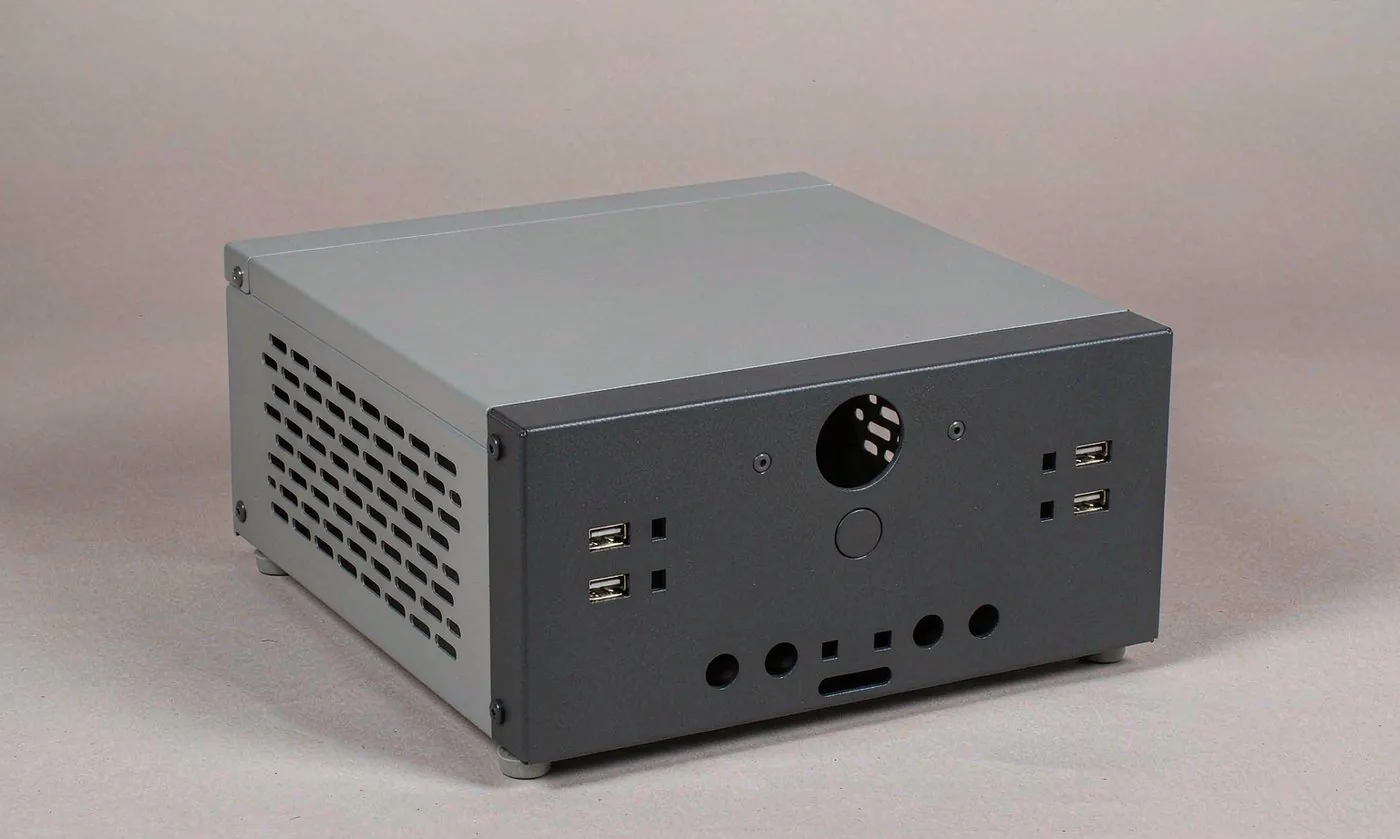
A sheet metal enclosure is a box-like structure that protects electronics or equipment while providing mounting, ventilation, connectors and user interfaces. "Custom" means the geometry follows your design rather than a manufacturer's stock catalogue: display windows, connector cutouts, vent patterns, embossed logos, mounting bosses, hinges and seals are all placed exactly where your product needs them.
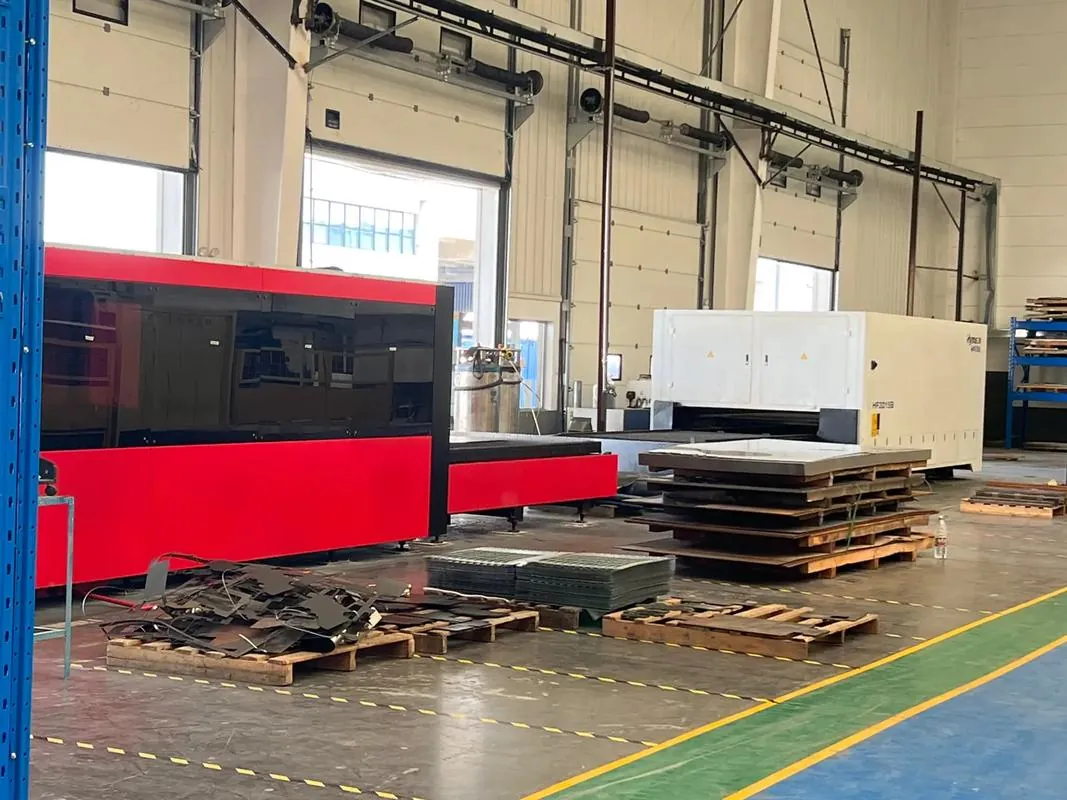
Most custom enclosures are made from steel (SPCC, SECC or galvanized), aluminum or stainless steel sheet, using four core processes: laser cutting, CNC bending, welding and surface finishing. When a supplier runs all of these in-house, quality control is simpler and lead times are shorter - which is why factory-direct sourcing from China remains popular with OEM brands.
Related reading: custom sheet metal enclosures we manufacture.
Custom vs. Off-the-Shelf: Which Do You Need?
Off-the-shelf enclosures (die-cast boxes, standard racks, universal project boxes) win when your PCB and interfaces fit the stock geometry, volumes are moderate, and time-to-market matters more than aesthetics or fit.
Go custom when any of these apply:
- Your board, connectors or display do not fit a standard box
- You need a brand look: custom cutouts, colors, logos, textures
- You need IP-rated sealing or EMI shielding designed in
- You plan annual volumes that justify tooling or process optimization
- Your product is an instrument or appliance where the enclosure is part of the value proposition
Custom fabrication has no mould tooling cost (unlike die-casting), so even 100-500 unit runs are practical - one of the reasons sheet metal enclosures are so common for industrial electronics.
Choosing the Material
| Material | Typical use | Key properties |
|---|---|---|
| SPCC (cold-rolled steel) | General-purpose enclosures, painted parts | Lowest cost, excellent forming & painting |
| SECC / SGCC (galvanized) | Outdoor & corrosion-sensitive parts | Zinc layer protects even before painting |
| Aluminum 5052/6061 | Lightweight, portable, premium devices | Light, corrosion resistant, good heat spread |
| SUS304 / SUS316 stainless | Medical, food, marine, outdoor telecom | Hygienic, corrosion resistant, strong |
| Aluminum extrusion 6063 | Long housings, heat sinks, rails | Fixed cross-section, machined ends |
Material choice drives roughly 20-35% of enclosure cost - and more of its corrosion and thermal behaviour.
Rule of thumb: if the product is static and painted, SPCC is usually the smartest value. If it will live outdoors, choose galvanized or powder-coated steel with edge protection. If weight or heat matters, move to aluminum. If it will be washed or installed near salt water, use stainless SUS304 or SUS316L.
Thickness, Bends & Design Rules
| Material | Typical thickness | Min. bend radius |
|---|---|---|
| SPCC steel | 1.0 - 1.5 mm (0.8 - 3.0 possible) | 1 x material thickness |
| Aluminum 5052 | 1.0 - 2.0 mm | 1 x thickness (softer alloy) |
| Aluminum 6061 | 1.5 - 3.0 mm | 1.5 - 2 x thickness (cracks easily) |
| Stainless SUS304 | 1.0 - 1.5 mm (up to 3.0) | 0.8 - 1 x thickness, springback high |
Three rules save the most redesign pain:
- Keep holes away from bends - a hole edge should sit at least 2-3x the material thickness (plus bend radius) from a bend line, or it will distort.
- Respect minimum flange height - small tabs next to long bends cause tooling interference. Typically a flange needs to be at least 4x thickness high (more with countersunk holes).
- Standardize bend radii - using one inner radius per thickness keeps tooling simple and cost low.
Your supplier should catch these issues during DFM review. If they do not mention them, ask why not - it is the clearest signal of engineering maturity. See our manufacturing process and DFM checklist.
Tolerances You Can Expect
| Feature | Standard | Tight (with note on drawing) |
|---|---|---|
| Laser-cut profile | +/- 0.10 mm | +/- 0.05 mm |
| Bend position (critical) | +/- 0.15 mm | +/- 0.10 mm |
| Bend angle | +/- 0.5 deg | +/- 0.25 deg (tooling dependent) |
| Overall formed box size | +/- 0.3 mm | +/- 0.15 mm on selected dims |
| Hole diameters | H13 typical | H11 possible by machining |
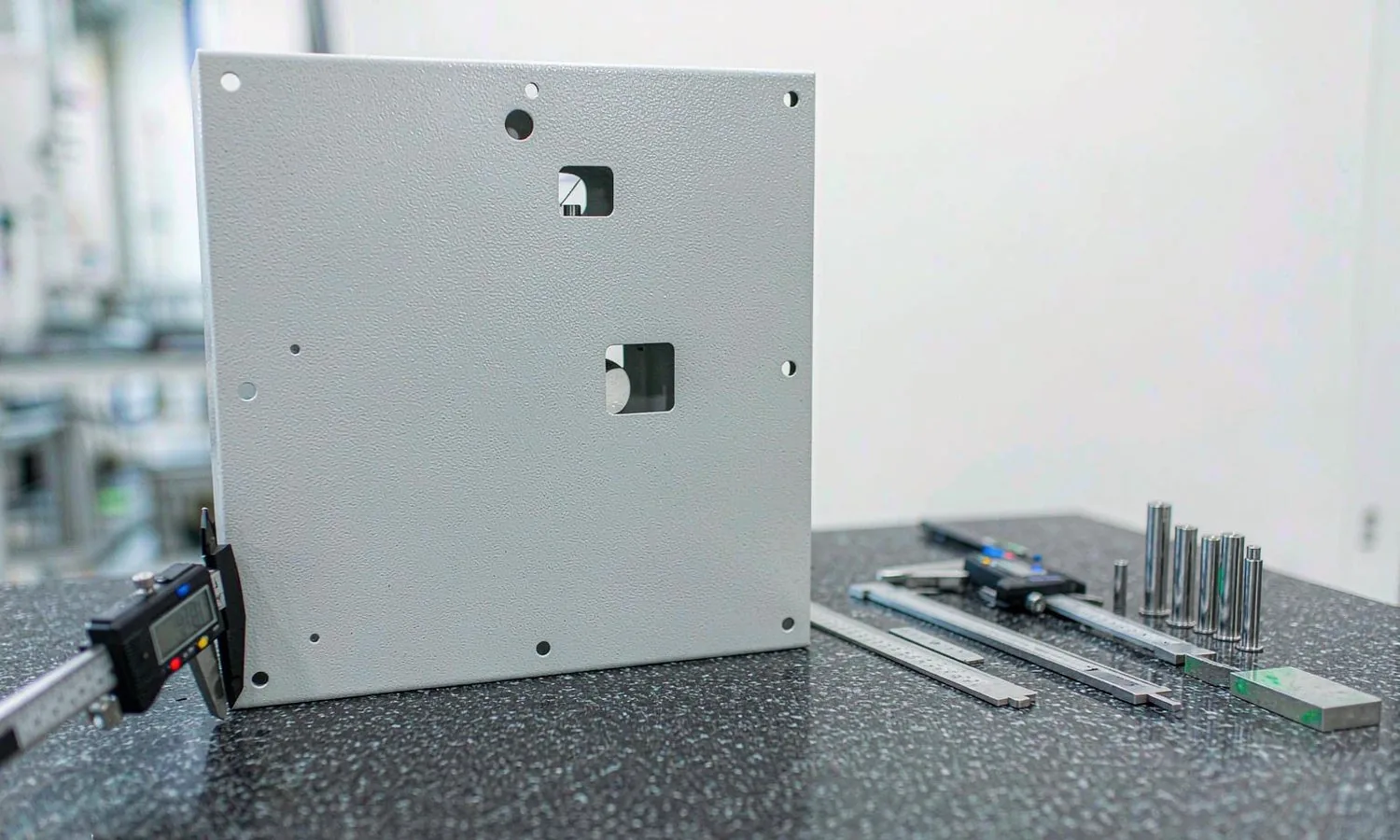
Two honest notes: (1) sheet metal tolerances are not CNC-machining tolerances - bending springs back and thin material moves, so spec critical dimensions, not every dimension; (2) tolerance costs money, so only tighten what the assembly actually needs.
Surface Finishes Explained
| Finish | Best for | Notes |
|---|---|---|
| Powder coating | Painted steel enclosures | Any RAL; textured or smooth; tough, UV-resistant polyester |
| Anodizing | Aluminum | Clear, black or color; hard coat for wear; electrically insulating |
| Brushing / polishing | Stainless & aluminum visible panels | #4 brush is the industrial standard |
| Zinc / nickel plating | Internal steel parts | Low-cost corrosion protection |
| Silk-screen / pad print | Logos, legends, scales | Add after coating; multi-color possible |
For outdoor products, specify powder coating with pre-treatment (degrease, phosphate or chromate-free conversion) - the pre-treatment matters more than the paint itself. For brushed aluminum, confirm brush direction on the drawing so panels match.
10 Questions to Ask a Sheet Metal Enclosure Supplier
- Are you the factory or a trading company? (Ask for a live video tour if in doubt.)
- Which processes do you run in-house vs. outsource?
- Do you review DFM before quoting - and will you show me the comments?
- What drawing formats do you accept, and who prepares the flat patterns?
- What are your standard tolerances for cutting and bending?
- What is the real MOQ for prototypes and for serial production?
- How do you control color and finish consistency across batches?
- What inspection reports do you provide with each shipment?
- How do you protect my drawings and IP (NDA policy)?
- What is included in the quotation: tooling, samples, packaging, Incoterm?
You can ask all ten in a single email - a factory confident in its process will answer happily. Send us the same questions and time our reply.
Samples, QC and Repeat Orders
A professional flow looks like this: quotation with DFM comments (usually within 24h) → prototype or pre-production sample → sample approval with photos → mass production with in-process inspection → first-article report → export packing photos → shipment.
On repeat orders the approved sample becomes the production reference. Color chips, dimension masters and packaging photos are kept on file so the second batch matches the first. This is the discipline that makes a factory "repeatable" rather than just "capable".
Frequently Asked Questions
Prototype samples typically take 5-10 working days after drawing approval; serial production usually 15-30 days depending on quantity, finishing and assembly scope.
Yes - sheet metal needs no mould tooling, so size changes are just drawing changes. This is a key advantage over die-cast or injection-moulded housings for low and medium volumes.
Colors are controlled with RAL standards and production samples. We keep approved color chips per project and verify with test panels on serial runs.
Yes - silk-screen, pad printing and laser marking are available in-house, including multi-color legends and scales on front panels.
Yes. We routinely work under NDA with OEM brands. Tell us at the enquiry stage and we will sign before you send files.
Need a quote for your enclosure?
Send your drawing and get DFM feedback plus pricing within 24 hours on working days.