Export Packing, Palletising & Shipping
A part that arrives damaged is a part that was not made. Packing for export is designed around what the part is, how it is handled and how far it has to travel — not around what happens to be in the packing store.
A part that arrives damaged is a part that was not made
A fabricated part can leave the workshop perfect and arrive bent, scratched or with coating chipped off a corner. Every one of those outcomes is decided by the packing method and by how many times the goods are handled before they reach you.
Packing is therefore part of the quotation scope and is selected by part type, not by what happens to be in the packing store.
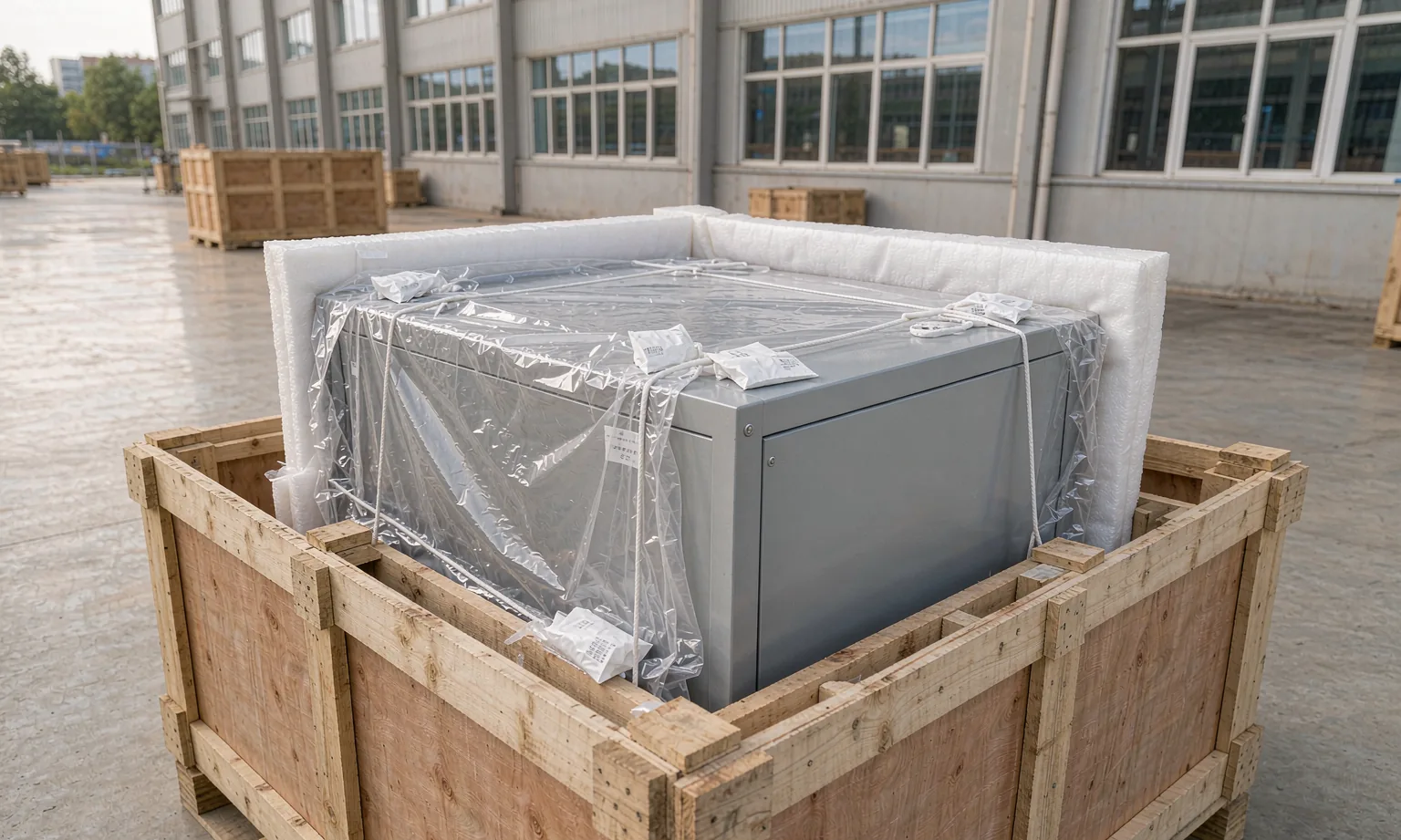
Packing is specified, not improvised
A fabricated part can leave the workshop perfect and arrive bent, scratched or with a coating chipped off a corner. Every one of those outcomes is decided by the packing method and by how many times the goods are handled between our door and yours.
Packing is therefore part of the quotation scope. It is selected by part type — flat parts, formed panels, welded assemblies, coated and appearance-critical parts — rather than being one standard method for everything.
Packing methods by part type
| Part type | Typical packing | Protection focus |
|---|---|---|
| Flat cut blanks and panels | Banded stack on a pallet, interleaved, corner protection | Edge deformation and surface scratches |
| Formed panels and doors | Stacked with foam or board separators, banded | Coating damage between parts and at edges |
| Welded structures and frames | Braced on a pallet sized to the frame, corner protection | Distortion and diagonal twist in transit |
| Assembled enclosures | Crate or heavy carton with foam and corner guards | Door, hinge and gasket damage |
| Appearance-critical coated parts | Film, then foam, then board, then carton | Surface marks from handling and stacking |
| Hardware and small parts | Bags or boxes inside a carton, labelled by part number | Loss and mixing between part numbers |
Protection layers, and what each one is for
- Protective film or paper stops surfaces rubbing during handling and stacking; it is removed before final assembly.
- Foam, board or corrugated separators stop part-on-part contact, which is what damages coatings on flat stacks.
- Corner guards and edge protection carry the load at the point where a strapped pallet concentrates force.
- Bracing keeps a frame or assembly from moving inside its pack, which is what twists a welded structure.
- Strapping and banding hold the pack together but pull against protection, not against the coating or a cut edge.
- Outer carton or crate provides the surface that gets handled, so the part does not have to.
Palletising and container planning
Palletising is planned against the container, not against the pallet alone. Optimising a pallet in isolation can produce a load that wastes space in a 20 ft or 40 ft container, and the freight cost usually outweighs any packing saving.
| Consideration | How it is handled |
|---|---|
| Pallet size | Standard sizes chosen so the footprint tiles efficiently across the container floor |
| Stack height | Set so the load can be handled, and so lower cartons are not crushed |
| Weight distribution | Heavier items low, load centred, so the pallet is stable when slung |
| Mixed part numbers | Cartons marked and listed by position so unloading matches the packing list |
| Moisture | Desiccant and moisture barrier liner on sea freight where coatings or bare steel could corrode |
| Loading sequence | Planned so the pack that is needed first is loaded last |
Shipping methods
| Method | Typical use | Consideration |
|---|---|---|
| Sea freight (LCL) | Smaller consignments that do not justify a full container | Lower cost per volume, longer transit, more handling at consolidation |
| Sea freight (FCL) | Volume that fills or nearly fills a 20 ft or 40 ft container | Best protection and lowest handling, since the container is not opened in transit |
| Air freight | Urgent samples, replacement parts and schedule-critical deliveries | Fastest, and the cost is driven by chargeable weight — best for dense small parts |
| Express courier | Samples and small spare sets | Door to door with tracking, economical only up to modest weights |
Budget, not promise
Freight rates move with capacity and season, so a shipping figure in a quotation is valid for the window stated on it rather than indefinitely. Where the rate is not yet fixed, we quote the term and the expected band rather than a number that will change before the goods are ready.
Documents and visibility
- Commercial invoice, packing list and transport document are issued for every shipment.
- Photographs of the packing are taken before the pallet is closed, so what was shipped is documented rather than described.
- Pallet and carton markings match the packing list, so receiving can check the delivery in a defined order.
- Shipment timing is advised in advance so the receiving end is not surprised by a delivery.
How to reduce packing cost without increasing risk
- Ship flat and assemble locally where the product allows it — a flat stack occupies a fraction of the volume of an assembled unit.
- Split deliveries can reduce pack complexity when part of an order is needed earlier than the rest.
- Standardise part dimensions so several parts share one pallet footprint and one pack design.
- Tell us the handling environment — a delivery to a covered dock needs less moisture protection than goods that sit in a coastal yard before installation.
Common Questions
Packing is part of our scope, so damage caused by inadequate packing is our responsibility. Damage that occurs after the goods have been collected by your forwarder or that follows abnormal handling is a freight claim, and we support it with packing photographs and weight and dimension records so the claim can be made.
Yes. If you have a packing standard, a pallet specification or a customer requirement, send it with the enquiry and the quotation will be built around it. Where a specified pack is more expensive than necessary we will say so and propose the alternative with a reason.
That depends on the trade term. On DAP or DDP terms the goods are delivered to the address on the order. On EXW, FOB or CIF terms delivery is to the point defined by the term, and you arrange the onward leg.
Short-term staging of finished goods is normal and can be arranged, and parts are stored packed in our warehouse. Longer-term storage or scheduled call-off is arranged case by case and stated on the quotation.
Send Us Your Drawing
Tell us what you need made, the environment it works in and the quantity — we will return engineering feedback and a quotation, typically within 24 hours on working days.