Serial Production & Build-to-Print Manufacturing
Once a part is approved, the job changes from making it right once to making it identical every time. That is a different discipline: process control, recorded set-ups, repeatable inspection and a plan for what happens if a dimension drifts.
Making it right once is not the same as making it identical every time
A prototype proves a part can be made. A production run proves it can be made the same way several hundred times, by different operators, in different weeks, without the customer noticing which batch a part came from.
This page sets out how we hold that repeatability on build-to-print work: what is locked before the first unit, how variation is controlled and what the inspection plan covers.
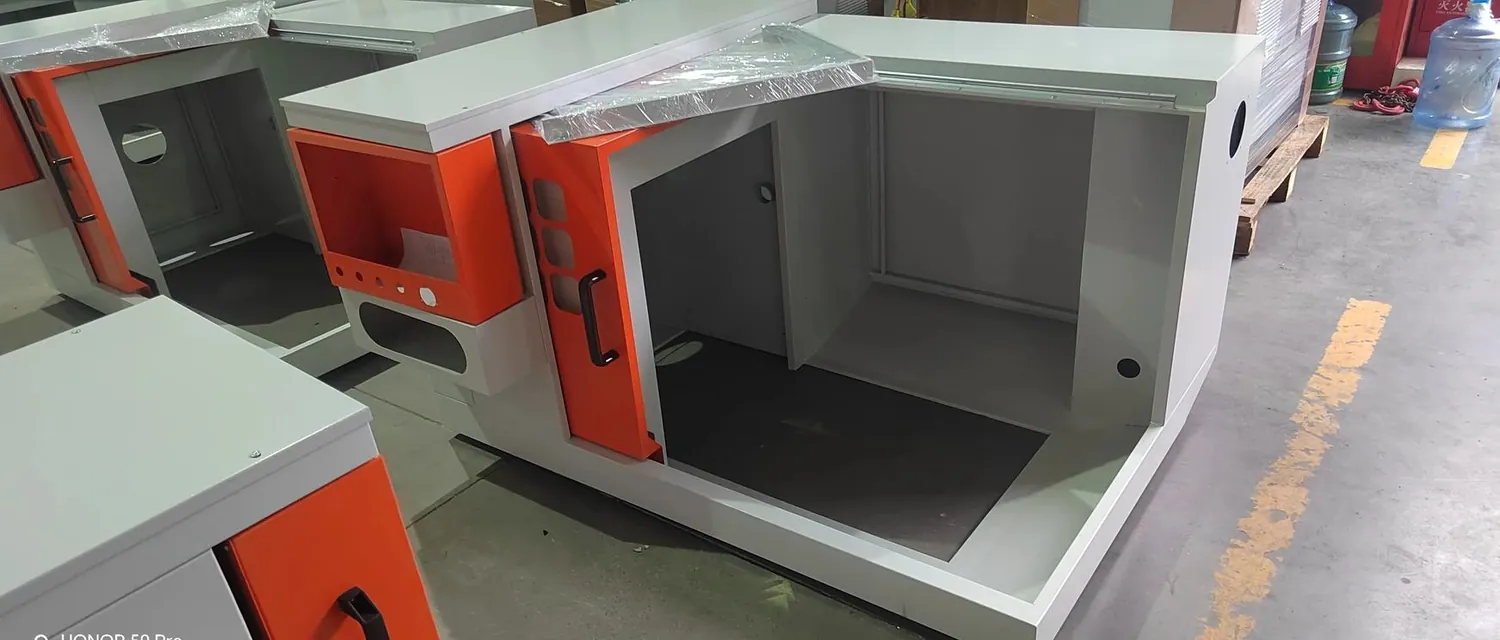
From approved sample to repeatable series
A prototype proves that a part can be made. A production run proves that it can be made the same way several hundred times, by different operators, in different weeks, without the customer noticing which batch a part came from.
The work that makes that true is mostly invisible on the delivered part: the program is locked, the set-up is recorded, the first part off each run is measured against the approved drawing, and any change to material, tooling or process is written down. Without that record, a run is just a large prototype.
What build-to-print means, and what it does not
In a build-to-print arrangement you own the design and the drawing; we own the process. Our job is to manufacture to your drawing, control the process that achieves it, inspect against it and document it.
| Item | Owner |
|---|---|
| Design intent, function and the drawing itself | You |
| Manufacturability feedback and any proposed deviation from the drawing | Us, raised in writing before production |
| Process route, programming, nesting and set-up | Us |
| Tolerance on the drawing and any interface dimensions | You |
| Meeting the drawing on every unit, and proving it | Us |
| End-product certification and regulatory approval | You |
Two rules follow from that split. We do not change a drawing ourselves — a deviation is proposed to you and applied only after your approval. And we do not accept an instruction to ‘make it like the sample’ without a drawing, because the sample cannot define a tolerance.
What we lock down before the first production unit
- The revision. A single drawing revision is referenced by the work order, so there is no ambiguity about which version is being manufactured.
- The process route. Material grade and thickness, machine, tooling, operation sequence, finish and coating specification, all written against the part number.
- The flat pattern and program. The nested program used for the approved sample is the program used for the series, unless a change is agreed and recorded.
- First-article approval. The first part of the run is measured against the drawing and compared with the approved sample before the batch continues.
- Inspection plan. Which features are measured, at what frequency, and what happens when a reading is out of tolerance.
How repeatability is actually held
| Source of variation | How it is controlled |
|---|---|
| Material batch | Grade and thickness checked on receipt; coating and welding behaviour can shift between batches, so a change is recorded |
| Press-brake set-up | Set-up values recorded per part number so the next run starts from the same point rather than from scratch |
| Bend sequence | Fixed in the work instruction; changing it changes accumulated tolerance |
| Tooling wear | Bend angle and punch condition checked during the run, not only at the start |
| Laser consumables | Nozzle and lens condition monitored, because a degraded beam changes cut edge quality |
| Coating batch | Coating colour and film thickness checked against the approved sample, not only against a colour card |
| Operator | Work instructions and first-off checks make the result independent of who runs the job |
Inspection across a production run
Inspection in a serial run is built around where the risk is created, rather than around a single final check.
- First article. Full dimensional check against the drawing, compared with the approved sample.
- In-process. Bend angle, hole position and weld quality checked at the machine as the run proceeds.
- Post-finish. Coating thickness and appearance, hardware presence, and fit checks on assembled units.
- Packing. Quantity, labelling and protection verified before the pallet is closed.
- Records. Measured values, batch traceability and inspection reports retained and available on request.
Volume pricing and how it is held
A serial price is normally quoted against a quantity band rather than a single number, because the fixed cost is spread differently at 200 units than at 2,000. If the band is not reached, the price moves — and we would rather say that at quotation stage than after delivery.
- Bands are typically quoted at sample, low-volume, mid-volume and high-volume quantities so you can plan a ramp.
- Material is the one block that can move without notice, because sheet prices do. The quotation states how material movement is handled.
- Design changes during a run restart the approval cycle for the affected features, which is why changes are best grouped rather than drip-fed.
- Annual or scheduled programmes are planned against a capacity slot, so the delivery date is protected rather than being re-negotiated each time.
What we need from you to run a serial programme well
- A frozen drawing revision with a stated general tolerance and the critical interfaces identified.
- A forecast, even a rough one — capacity planning is what keeps the delivery date realistic.
- A single point of contact for engineering questions, so a query does not stall a running batch.
- An agreed inspection level, so that both sides know what ‘conforming’ means before the first unit ships.
Common Questions
There is no fixed minimum, because the economics are set by the part rather than by a house rule. Small, simple parts are economical at a few hundred pieces; large welded assemblies usually make sense at lower quantities. Send the drawing and an intended quantity and we will tell you where the sensible band starts.
Scheduled call-off against a forecast is possible for repeat programmes, with parts produced in agreed lots and released against your schedule. Long-term storage of finished goods is arranged case by case and stated on the quotation.
The inspection plan defines the response. The run is stopped at the affected operation, the cause is established, parts made since the last conforming check are quarantined and measured, and no further units are released until the process is back inside tolerance and the correction is recorded.
Yes. Parts that do not meet the agreed drawing and specification are our responsibility to replace or credit, provided the non-conformance is reported through the agreed channel. The commercial terms, including any limitation of liability, are stated on the quotation and order confirmation.
Send Us Your Drawing
Tell us what you need made, the environment it works in and the quantity — we will return engineering feedback and a quotation, typically within 24 hours on working days.