Payment Terms, Trade Terms & Order Paperwork
What is agreed before an order starts is what keeps an order simple while it runs. This page sets out how payment, trade terms and documents are normally handled on sheet metal orders.
Settle the terms before the order, not during it
Payment schedule, trade term and document set are the three things that cause delays when they are left open. Settling them at quotation stage costs nothing; settling them after the parts are made costs time on both sides.
The tables below show how each is normally structured on sheet metal orders, and what changes between a sample, a first production order and a repeat programme.
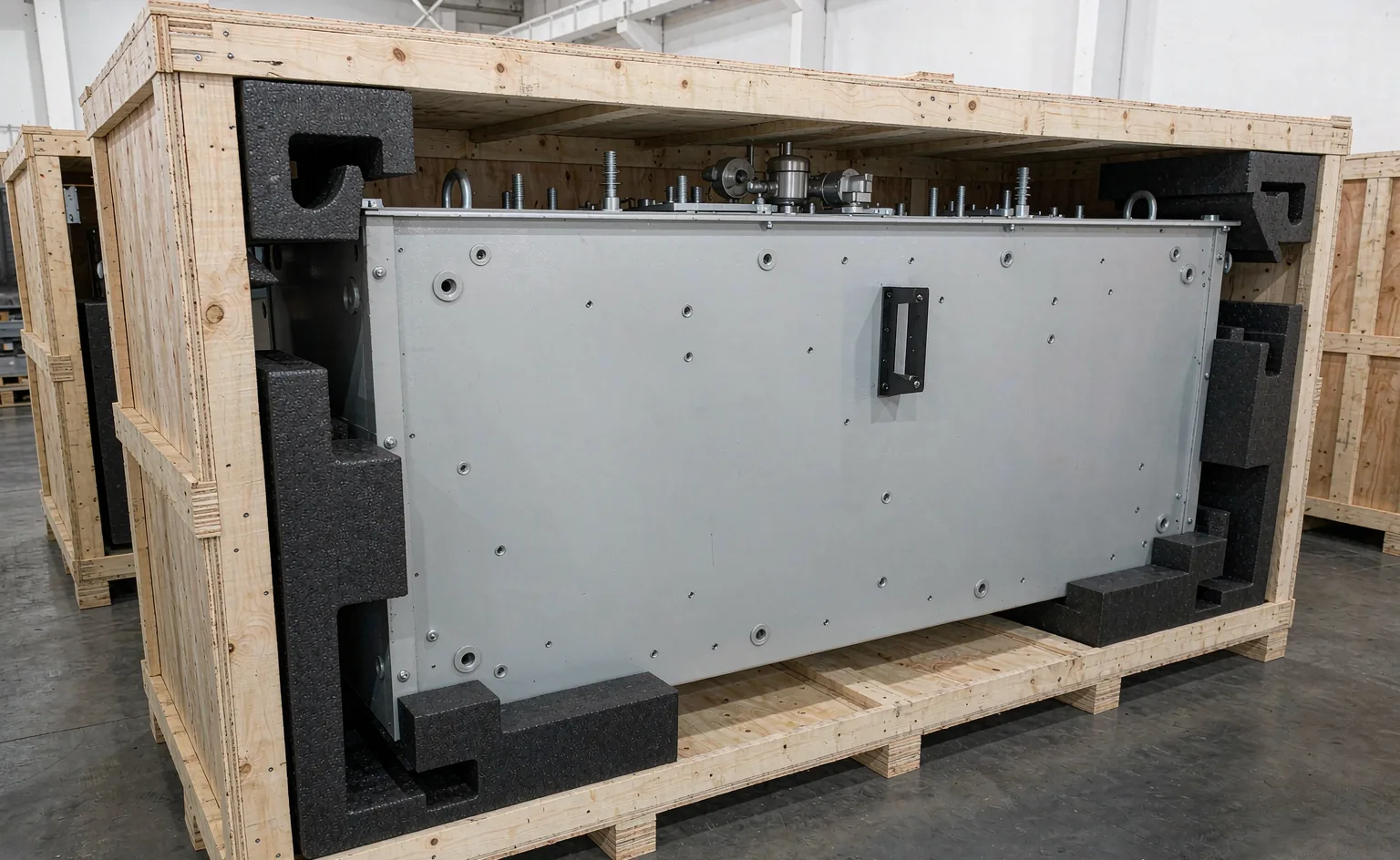
The three things that should be settled before production
- Scope. Material, thickness, finish, hardware, assembly level and packing, all written down rather than implied.
- Terms. Payment schedule, trade term and the point at which risk and cost transfer.
- Documents. Which commercial and shipping documents you need, and in what form.
These are the questions that cause delays later. Settling them at quotation stage costs nothing; settling them after the parts are made costs time on both sides.
Payment structure on a typical order
| Order stage | Typical structure | Why it is arranged this way |
|---|---|---|
| Sample or prototype | Payment in full before shipment of the sample | The amount is small and the work is done before anything is shipped |
| First production order | Deposit with the order, balance before shipment | The deposit covers material purchase and production set-up; the balance settles the finished goods |
| Repeat order | Terms can be relaxed after a track record is established | Repeated on-time payment is the basis for better terms |
| Tooling or special tooling | Paid with the order that requires it | Tooling is made specifically for that part and is not reusable elsewhere |
The exact schedule for a specific order is stated on the quotation and confirmed on the proforma invoice. Where a customer has its own standard terms, they can be discussed — but the agreed schedule is the one written on the order confirmation, not the one assumed from a previous conversation.
Trade terms
We work with the standard Incoterms, and the right one depends on how much of the logistics you want to control.
| Trade term | What it means in practice | Suited to |
|---|---|---|
| EXW | You arrange collection from our works | Buyers with their own forwarder already collecting in the region |
| FOB | We deliver to the Chinese port; you arrange the sea freight | Buyers with a nominated forwarder and their own freight rates |
| CIF | We arrange and pay freight and insurance to your port | Buyers who want one price landed at the destination port |
| DAP / DDP | Goods delivered to your address, DDP including duties | Buyers who want minimal involvement in import formalities |
Freight cost depends on volume, destination and timing rather than on the goods, so the term is best chosen when the order is placed rather than assumed from a catalogue. Where a quotation shows a CIF or DAP figure, that figure is valid for the shipping window stated on it.
Documents that accompany a shipment
| Document | Purpose |
|---|---|
| Commercial invoice | Customs value, quantities and terms |
| Packing list | Carton and pallet breakdown with weights and dimensions |
| Bill of lading or air waybill | Carrier document for sea or air freight |
| Certificate of origin | Where a preferential or required origin document is needed |
| Inspection report | Dimensional or process records where the order requires them |
| Material certificates | Where the material grade has to be evidenced |
The document set is agreed at order stage, so nothing is discovered at the port. Where a destination requires an additional certificate, telling us at order stage is what allows it to be prepared in time.
Changes, delays and cancellations
- Changes before material is cut. Usually straightforward; the quotation is revised and re-confirmed.
- Changes after cutting. The affected material and labour are already committed, so the change is quoted as additional work.
- Delays in approval. Delivery dates run from the approval that releases production, not from the date the order was placed.
- Cancellation. Work already completed, material bought specifically for the order and non-reusable tooling are chargeable.
How to keep an order simple
- Use one drawing revision and state it on the purchase order.
- State material, thickness, finish and packing explicitly, even when you believe they are obvious.
- Say whether the parts ship flat or assembled, and whether hardware is fitted.
- Name the trade term and the destination port or address on the order, not just in an email thread.
- Agree the document set before production starts.
Common Questions
A deposit with the order and the balance before shipment is the usual structure for a first production order, with the exact percentage stated on the quotation. For small sample orders payment in full before shipment is normal because the amounts are small.
Letters of credit can be discussed for larger orders, and the terms are reviewed case by case. Because the amounts on most sheet metal orders are small relative to the bank charges a letter of credit attracts, a straightforward transfer schedule is usually the more economical route for both sides.
On EXW, FOB and CIF terms the buyer pays duty at destination, as the import is made in the buyer's name. On DDP terms duty is included in the delivered price. Duty rates depend on your country's tariff schedule and on the product classification, which is why the term should be agreed before the order.
The invoice is issued to the entity named on the order, and the shipping documents are issued to match so that the customs paperwork is consistent. If a different entity has to appear as consignee, tell us at order stage so the documents are prepared that way from the start.
Send Us Your Drawing
Tell us what you need made, the environment it works in and the quantity — we will return engineering feedback and a quotation, typically within 24 hours on working days.