Sheet Metal vs CNC Machining vs Die Casting: Choosing an Enclosure Process
Engineering Team | Anjue Metal | Updated Nov 6, 2026 | 9 min read
There is no single best process for a metal enclosure - the right one depends on volume, wall thickness, tolerances and budget. Here is how the four common approaches compare, and a short decision path to pick between them.
1. The four processes
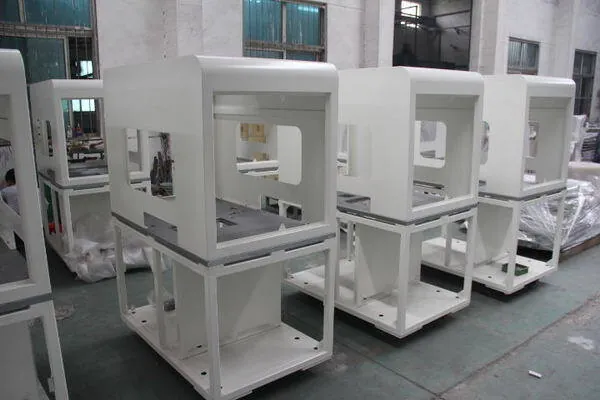
Sheet metal fabrication. Flat blanks are laser or plasma cut, bent on a press brake, welded, then finished (powder coat, plating). It is flexible, needs almost no tooling, and handles complex shapes with cutouts, brackets and seams. This is the workhorse for most enclosures.
CNC machining from solid. A block of metal is milled into shape. Tolerances are extremely tight and there are no welds or seams, but it is slow and wastes material - practical for small, precise parts and prototypes, not for large enclosure bodies.
Die casting (usually aluminum). Molten metal is forced into a steel die. It excels at high volume with thin, complex walls and integrated features, but the die can cost from ten thousand to well over one hundred thousand dollars and takes weeks to make.
Extrusion plus fabrication. Aluminum is pushed through a die into a long profile, then cut, CNC-machined and joined. Ideal for linear or long enclosures and for building in heatsinks and frames.
2. Side-by-side comparison
| Process | Best volume | Wall / shape | Tolerance | Tooling | Lead time |
|---|---|---|---|---|---|
| Sheet metal fab | 1 to a few thousand | Flat-to-bent, complex cutouts | Good (datum-dependent) | Low / none | Days to a few weeks |
| CNC from solid | Low / prototype | Solid, no seams | Very tight | Low (just fixtures) | Days to weeks |
| Die casting | 10,000+ | Thin, complex 3D | Good, consistent | High ($10k-$100k+) | Weeks to months (tooling first) |
| Extrusion + fab | Medium-long runs | Long / linear profiles | Good on profile | Medium (die) | Weeks (tooling + run) |
3. Volume and tooling trade-offs
- Sheet metal: economic from one piece to a few thousand, because there is essentially no tooling to amortize.
- Die casting: only wins above roughly 10,000 parts, where the expensive die is spread across the run.
- CNC machining: best for low volume and prototypes where you cannot wait for tooling.
- Extrusion: suits medium-to-long runs of a repeated profile (frames, rails, heatsink enclosures).
4. How to choose
Answer four questions, then map them:
- How many do you need? Low / mid volume favors sheet metal or CNC; very high volume favors die casting.
- What wall thickness and shape? Thin complex 3D walls favor die casting; flat bent panels favor sheet metal; long profiles favor extrusion.
- What tolerance? Tight-assembled-feature needs favor CNC or die casting; enclosure fit usually fits sheet metal with good datums.
- What budget and lead time? No-tooling and fast points to sheet metal; amortized tooling and longer lead points to die casting.
In practice many enclosures combine processes: a sheet-metal body with CNC-machined brackets, die-cast corner nodes, or extruded frames and heatsinks.
Frequently Asked Questions
Frequently Asked QuestionsFor low-to-mid volume, yes - there is essentially no tooling to pay for. Die casting only wins above roughly 10,000 parts, where the expensive die is spread across the production run.
For very tight tolerances, small complex parts, or prototypes where you cannot wait for tooling. It is too costly for large enclosure bodies because it removes material slowly from a solid block.
Yes, and it is common: a sheet-metal body with CNC-machined brackets, die-cast corner nodes, or extruded frames and heatsinks lets each feature use the most economical process.
Sheet metal: days to a few weeks. Die casting: weeks to months because the tool is made first. CNC: days to weeks. Extrusion: tooling plus run, typically weeks.
Ready to start your project?
Send a drawing or a rough idea - our engineers will guide the rest.