Aluminum 5052 vs 6061: Which Alloy Should Your Enclosure Be Made From?
Materials Anjue Metal | Materials | 10 min read | Updated Oct 8, 2026
Aluminum enclosures look simple until you see the drawing. If it is a bent, welded housing with a clean anodized finish, 5052 will almost always outperform 6061. If it is a machined plate or a structural bracket, the answer flips. Here is the reasoning, and the failure most buyers only discover after the parts arrive.
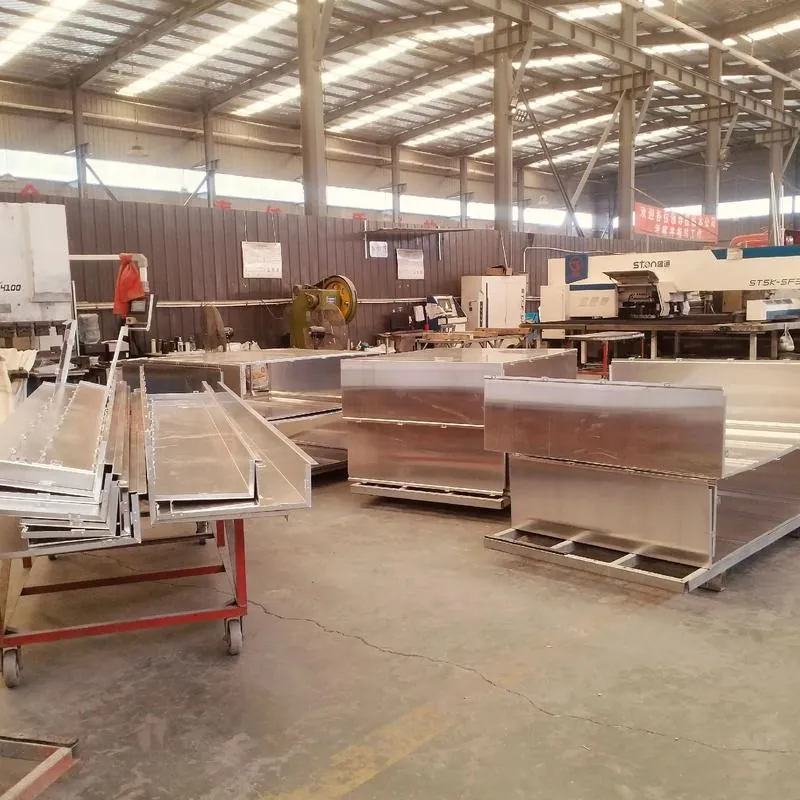
Two Different Families, Two Different Personalities
| Property | 5052 | 6061 |
|---|---|---|
| Alloy family | Aluminium-magnesium (5xxx) | Aluminium-magnesium-silicon (6xxx) |
| Typical temper for sheet | H32 | T6 |
| Tensile strength | approx. 210-260 MPa | approx. 290-310 MPa |
| Bendability | Excellent | Poor in T6, better in T4 or O |
| Weldability | Excellent | Good, but loses properties in the heat-affected zone |
| Anodizing quality | Very good, bright and even | Good, but can show a duller, greyer tone |
| Corrosion resistance | Excellent, especially marine | Good |
| Machinability | Poor (gummy) | Excellent |
| Relative material cost | Baseline | Typically similar to slightly higher |
The short version: 5052 is a forming alloy. 6061 is a machining and structural alloy. Most enclosure problems start when someone specifies 6061 because it sounds stronger.
The Bending Problem
This is the single most common and most expensive mistake.
6061-T6 has limited elongation. Bend it to a tight radius and it will crack - often not at the bend line you can see, but as a hairline fracture that only shows up after anodizing or during a drop test. Suppliers who accept 6061-T6 bending jobs and simply "try it" are gambling with your delivery date.
If you need 6061 and your part is bent, there are only three honest answers:
- Use T4 temper and age-harden after forming. Requires heat treatment capacity and a plan.
- Bend across the grain with a generous radius - typically at least 2-3 times the material thickness. Sometimes possible, always a geometry compromise.
- Change the material to 5052 or 5754. Cheapest and most reliable option in most cases.
We flag 6061-T6 bending on every incoming drawing and recommend an alternative before quoting. It is cheaper to change the alloy on paper than to scrap a batch.

Welding and Heat Effects
- 5052 welds cleanly with 5356 filler. It is the standard choice for welded aluminum housings, tanks and cabinets.
- 6061 welds acceptably with 4043 or 5356 filler, but the heat-affected zone loses strength. A 6061-T6 weldment will not be T6 anymore at the welds. For a frame or bracket this is usually fine; for a pressure or fatigue application it is not.
For welded aluminum enclosures, 5052 is the default and 5754 is a good alternative if the customer wants slightly better formability and welding behaviour again.
Anodizing and Coating Appearance
- 5052 anodizes to a bright, uniform finish. Clear anodized 5052 is the classic clean look for instrument housings.
- 6061 anodizes well but typically comes out slightly darker and greyer, and the colour tends to vary between alloy heats more than 5052. If the customer compares parts from two batches, that difference is visible.
- Powder coating hides these differences and works on both alloys. If the finish is opaque powder coat, alloy choice is driven purely by forming and strength.
One caution on any aluminum anodized part: aluminium is a much better heat conductor than steel, so laser cutting leaves a rougher dross edge if parameters are not set for the alloy. Expect a small cost allowance for a cleaner secondary operation on visible edges.

Which Alloy for Which Product
| Product | Recommended | Reason |
|---|---|---|
| Bent and welded instrument housings | 5052 | Formability and bright anodizing |
| Folded electronics enclosures, powder coated | 5052 or 5754 | Cheapest reliable route |
| Heat sink housings and machined plates | 6061 | Machinability and strength |
| Structural brackets and supports | 6061-T6 (or steel) | Strength per weight |
| Marine or coastal housings | 5052 or 5083 | Best corrosion resistance of the group |
| Extrusion-based enclosures | 6063 (extrusion alloy) | Designed for extrusion, not general sheet work |
| RF and shielding enclosures | 5052 usually | Consistent conductivity, good forming |
If weight matters less than cost, remember that steel is roughly one third the material cost of aluminium for the same stiffness - which is why large outdoor cabinets are usually steel and small, weight-sensitive or non-corroding housings are aluminium.
Specifying Aluminum Correctly
- State alloy and temper: "5052-H32" rather than "aluminium"
- Give thickness with the tolerance basis you want
- State the finish: clear anodized at a specified micron range, hard anodized, chromate conversion, or powder coated to a RAL
- Say whether the part is bent or machined, so the supplier can challenge 6061-T6 bending before quoting
- Note the environment: coastal, indoor, high humidity
Note · A useful habit: on the drawing, add one line saying what the part must do - "must withstand 500 hours salt spray per ASTM B117" or "anodized finish must match previous batch". Requirements like this surface problems at the quotation stage, when they are cheap to solve.
Frequently Asked Questions
Only with care. 6061-T6 has limited elongation and will crack at tight radii. It can sometimes be bent across the grain with a radius of at least 2-3 times the thickness, but for most enclosure work 5052 or 5754 is the correct choice.
5052 usually produces a brighter, more consistent anodized finish than 6061. If appearance is critical and the part is anodized clear, choose 5052.
Yes, typically two to three times the material cost for equivalent stiffness, because aluminium is less stiff per unit cost. It is chosen for weight saving, corrosion resistance or non-magnetic behaviour, not for cost.
They can, but put an insulating barrier between them - for example a coated fastener, a nylon washer or a painted surface. Direct aluminium-to-steel contact in a wet environment creates galvanic corrosion that attacks the aluminium.
We form aluminium sheet from 0.5 mm to 8 mm, and we will advise if a design is better served by extrusion or casting rather than sheet fabrication.
Explore Related Capabilities
- Aluminum Enclosures — Sheet and extrusion profile housings
- HMI Enclosures — Operator panel housings, often anodized aluminium
Have a Drawing to Quote?
Send STEP, DXF or PDF drawings and we reply with engineering feedback and a detailed quotation within 24 hours on working days.