Powder Coating, Wet Paint or Anodizing: Choosing the Right Enclosure Finish
Finishing Anjue Metal | Finishing | 11 min read | Updated Oct 8, 2026
The finish is the only part of your enclosure your customer actually touches. It is also the layer that decides whether a product still looks new after two years outdoors. Choosing between powder, paint and anodizing is not a matter of taste - each one has a different failure mode.
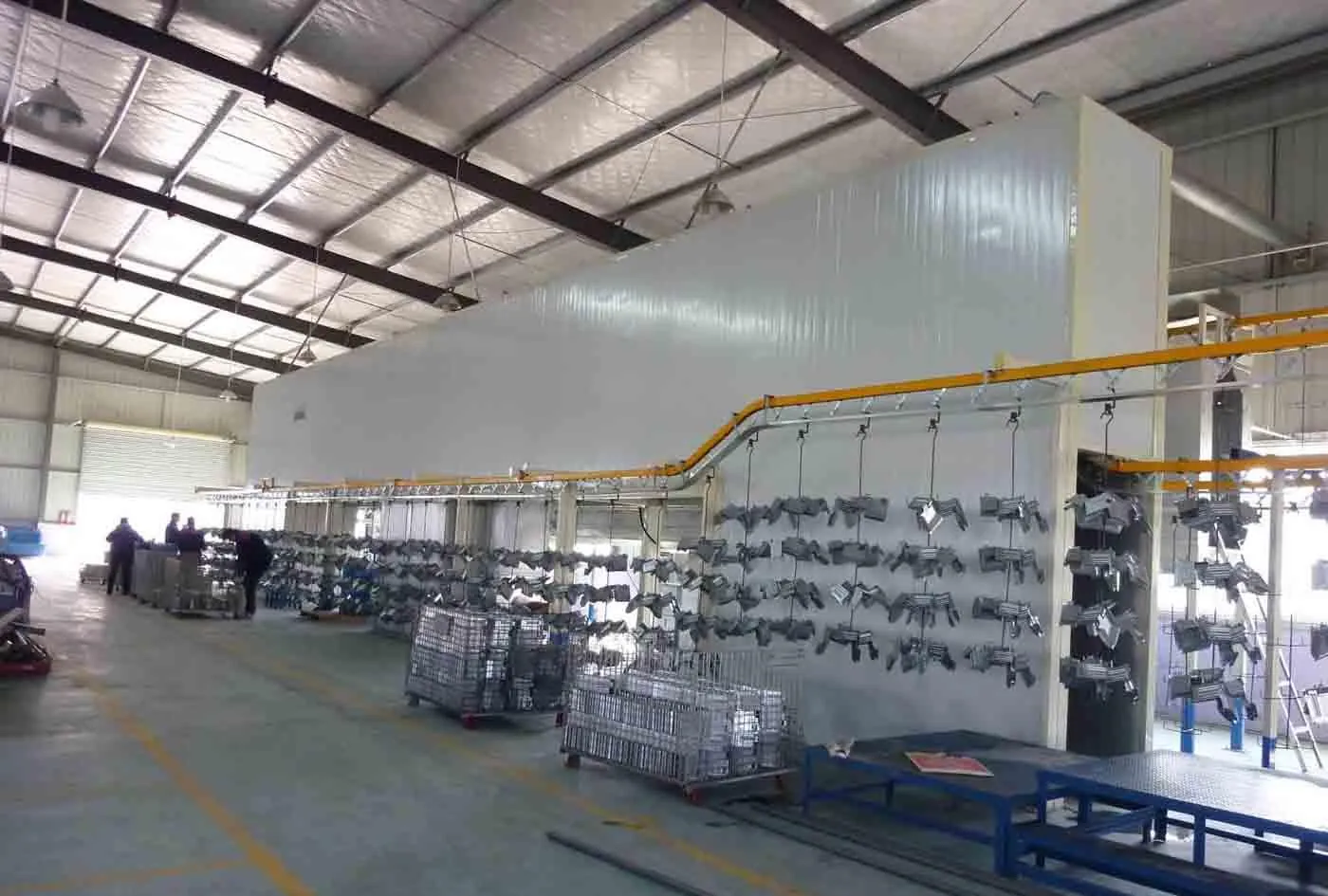
The Five Finishes You Will Actually Be Offered
| Finish | How it works | Best for |
|---|---|---|
| Powder coating | Electrostatic powder, oven-cured at roughly 180-200 C | Steel and aluminium enclosures, industrial and outdoor products |
| Wet painting | Liquid paint, air or spray applied, air or oven dried | Large assemblies, touch-up, colour matching, low-volume specials |
| Anodizing (aluminium only) | Electrochemical oxide layer grown from the base metal | Aluminium housings where a metallic look or hardness is wanted |
| Zinc plating / zinc-rich touch-up | Electroplated or applied zinc layer | Internal steel parts, weld repair, corrosion protection before coating |
| Brushing / polishing | Mechanical surface treatment, no added layer | Stainless and aluminium where a metal finish is the design intent |
Powder Coating: The Industrial Default
Powder coating is the standard finish for industrial enclosures because it is tough, cheap per square metre and available in essentially any colour.
Strengths:
- Thick, impact-resistant film - typically 60-100 microns
- Excellent resistance to scratching, chipping and most chemicals
- Any RAL colour, plus textures, matt, satin and metallic effects
- No solvents, so it satisfies most environmental procurement requirements
- Repairable locally with touch-up paint for small damage
Limitations:
- Requires oven curing, so part size is limited by oven dimensions
- Colour changes carry a changeover cost, which penalises small batches in unusual colours
- Edge coverage on cut edges can thin, which is why galvanized base metal helps outdoors
- Cannot be applied over a wet or contaminated surface - pre-treatment decides how long it lasts
Wet Painting: Flexibility and Limits
Wet paint is what you use when powder is not practical: very large assemblies that will not fit an oven, small batches in a specific colour, or where a customer demands a particular paint specification.
Strengths:
- Wide choice of chemistries: alkyd, acrylic, polyurethane, epoxy, and specialist systems
- Thin films preserve fine detail and texture
- Can be applied to very large objects and touched up on site
- Lower colour-change cost for one-off jobs
Limitations:
- Generally lower impact and abrasion resistance than powder at comparable film thickness
- Solvent content brings regulatory and ventilation requirements
- Requires careful surface preparation and, in many systems, a primer
- Drying time makes it slower for volume work

Anodizing: For Aluminium Only, and It Is Not Paint
Anodizing grows an oxide layer out of the aluminium itself. It cannot flake or peel, because there is no separate layer to delaminate - which is exactly why it looks good on an instrument housing and fails badly as a concept on steel.
What to know:
- Type II (sulphuric) anodizing is the standard decorative and protective finish, typically 5-25 microns.
- Type III (hard anodizing) gives a much thicker, harder layer - typically 25-50 microns - for wear resistance. It darkens the surface and reduces fatigue life, so it is for functional parts.
- Colour is achieved by dyeing the porous oxide layer before sealing. Clear and black are the most consistent; bright colours fade more in UV.
- Alloy matters. 5052 anodizes to a bright, even finish; 6061 tends to come out slightly greyer and more variable between heats.
- Masking is needed wherever electrical continuity or a press fit is required.
Selection Table
| Requirement | Recommended finish |
|---|---|
| Steel outdoor enclosure, any colour | Powder coating on pre-treated (ideally galvanized) base |
| Aluminium housing, metallic look, indoor instrument | Clear anodizing |
| Aluminium housing, colour required | Powder coating |
| Very large welded assembly that will not fit an oven | Wet paint with a suitable primer system |
| Internal steel parts, threads, brackets | Zinc plating |
| Stainless food or pharma panels | Brushed or polished, passivated |
| Colour-critical match to an existing product | Wet paint (easier small-batch matching) or powder to a supplied RAL |
| High wear sliding surfaces, aluminium | Hard anodizing |
Writing a Finish Specification That Gets What You Want
Instead of "powder coated black", specify:
- Colour reference: RAL number, and whether matt, satin or gloss. Send a physical sample or a previous part if the match is critical.
- Gloss level in units, if it matters to your customer.
- Film thickness range, for example 60-80 microns.
- Pre-treatment required, especially for galvanized or aluminium substrates.
- Masking instructions - which surfaces, holes and threads must remain finish-free or conductive.
- Performance test if the product is exposed: for example a specified number of hours of salt spray to ASTM B117, or a stated adhesion test.
Note · The cheapest way to waste a finishing budget is to specify a colour and a gloss level but say nothing about pre-treatment. On a humid product, poor pre-treatment is the entire difference between a finish that lasts five years and one that blisters in one.
Frequently Asked Questions
For industrial enclosures, usually yes - powder gives a thicker, tougher film with no solvents. Wet paint is better for very large assemblies, low-volume special colours and specialist paint systems.
Yes, with the correct pre-treatment. Applying powder to untreated galvanized steel is a common cause of coating delamination in outdoor products, so always confirm the pre-treatment step.
No. Anodizing is an electrochemical process specific to aluminium (and a few other metals such as titanium and magnesium). Steel is normally protected by plating, painting or powder coating.
Type II is the standard decorative and protective anodizing, typically 5-25 microns. Type III, or hard anodizing, is thicker and much harder, around 25-50 microns, and is used where wear resistance matters.
Send a physical sample or an agreed RAL reference, and state the gloss level. We keep the colour record for repeat orders so subsequent batches stay consistent.
Explore Related Capabilities
- Electrical Enclosures & Cabinets — Powder-coated steel cabinets and boxes
- Aluminum Enclosures — Anodized and powder-coated aluminium housings
Have a Drawing to Quote?
Send STEP, DXF or PDF drawings and we reply with engineering feedback and a detailed quotation within 24 hours on working days.