Choosing Protection Levels and Construction for Distribution Boxes
Distribution Anjue Metal | Electrical | 10 min read | Updated Oct 13, 2026
A distribution box is judged by what it keeps out and what it lets out. It has to keep water and dust away from live parts, let heat out of a space that is often too small for the load, and give a person a safe way to work inside it. Those three requirements pull against each other, and the box is where the compromise is designed.
- Three Requirements That Pull Against Each Other
- Choosing the Protection Level
- Indoor and Outdoor Installations
- Door Types, Access and Stiffness
- Cable Entries, Glands and Routing
- Temperature Rise and Heat Dissipation
- Earth and Neutral Bars, and Internal Metalwork
- Mounting and Installation Interface
- Checks on the Build
- How We Approach Distribution Boxes
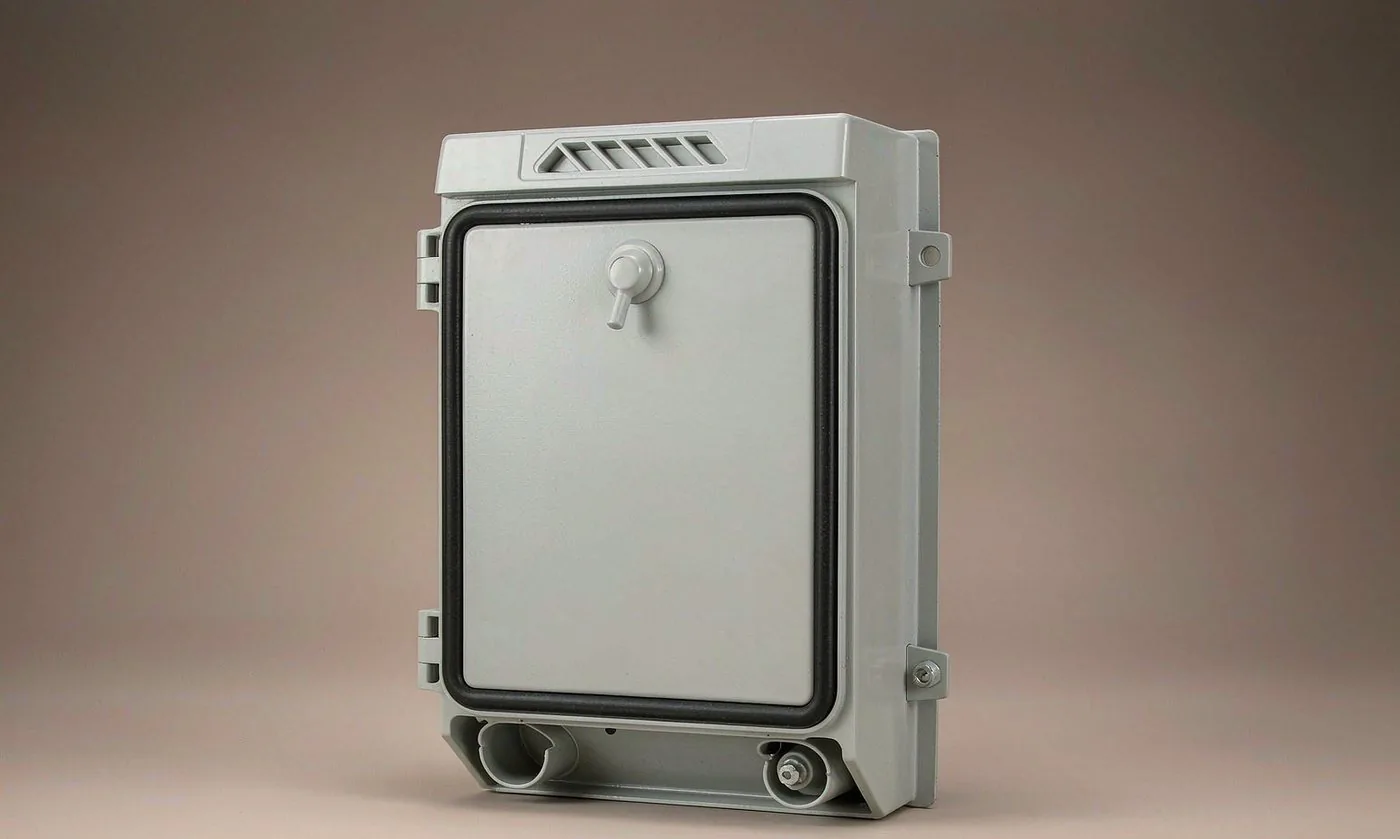
Three Requirements That Pull Against Each Other
| Requirement | What it wants | Opposed by |
|---|---|---|
| Keep water and dust out | A sealed box | Any vent or opening |
| Let heat out | Ventilation or surface area | Sealing and small size |
| Give safe access | A generous door and space | Sealing and stiffness |
| Hold the components | A rigid, well-sized box | Cost and wall space |
| Look acceptable | A finish and a shape | Nothing much, but it is not free |
The design task is to find the version of all four that the site can live with.
Choosing the Protection Level
- Start from the environment, not from a number: indoor dry, indoor damp, outdoor sheltered, outdoor exposed, washdown.
- Remember that condensation can be a bigger problem than rain in a damp, unheated room.
- Account for the fittings: glands, vents, filters and door gaskets all affect the achieved class.
- Choose door gaskets and hinges that can keep the class over years of opening, not just at the factory.
- Where a vent is needed, protect it rather than removing it.
Indoor and Outdoor Installations
- Indoor, dry: the simplest box, provided the load and the access suit.
- Indoor, damp or unheated: expect condensation, and design for it.
- Outdoor, sheltered: weather protection on the exposed faces and a sensible entry.
- Outdoor, exposed: full weather protection, drainage, UV-stable finish and a raised entry.
- Washdown or wet process: material and finish chosen for the cleaning regime.
Door Types, Access and Stiffness
- Choose the door type from the board width and the frequency of access.
- A wide door needs stiffening, or it sags and seals badly.
- Provide the door opening angle the site needs, and remember that a wall can limit it.
- Provide locks and handles that suit the security and the gloves of the people who use it.
- Consider a removable centre section where a double door would otherwise be needed.
Cable Entries, Glands and Routing
- Provide a removable entry plate, sized for the cables plus spare.
- Prefer bottom entry outdoors, with a raised entry or a drip loop.
- Keep the cable route clear of terminals and of the door swing.
- Provide strain relief and keep cable weight off the terminals.
- Seal or brush the entry where dust or draughts matter.
Temperature Rise and Heat Dissipation
- Estimate the heat from the components at the actual load, not the nameplate maximum.
- Remember that a sealed box loses heat only through its surface, and that mounting against a warm wall reduces that.
- Use ventilation, a larger enclosure or a different mounting where the margin is thin.
- Keep the hottest devices low, where cooler air arrives.
- Where a vent is used, document the filter interval and make the filter accessible.
Earth and Neutral Bars, and Internal Metalwork
- Provide earth and neutral bar mounting as the design requires, with the bars accessible and labelled.
- Bond the door and removable panels with dedicated conductors.
- Mask bonding faces before coating.
- Keep the internal metalwork arranged so that live parts are not within reach when the door is open.
- Provide barriers between sections where the design calls for them.
Mounting and Installation Interface
- Provide a fixing pattern that suits the wall or the structure, and record it on the drawing.
- Allow for cable and conduit entry from the direction the installation actually uses.
- Consider weight when loaded, because a distribution box is heavier than its empty weight suggests.
- Provide clearances for the door and for working space.
- Keep the mounting points accessible for maintenance.
Checks on the Build
| Check | Method | Why it matters |
|---|---|---|
| Door fit and gasket compression | Open, close and seal test | Protection class |
| Earth continuity | Continuity check on door and panels | Safety |
| Entry plate fit and spare blanks | Fit check | Cable entry |
| Bar mounting and labelling | Visual | Safe working |
| Internal clearances | Gauge against the design | Reach protection |
| Finish at masked bonding faces | Visual | Earth continuity |
How We Approach Distribution Boxes
- We fabricate bodies, doors, entry plates, mounting plates, internal barriers and brackets in steel, stainless and aluminium.
- We hold the openings, entries, bar mounting and bonding points to the arrangement drawings you supply.
- We will tell you when a requested protection class, a requested internal layout and a requested thermal arrangement cannot all be met at once.
- We do not assemble or test the electrical components, we do not carry out the electrical design, and we do not certify the board to any standard.
- Every quotation states which operations are completed in our plant.
Send the environment, the board layout and the access requirement, and the box can be built to keep the weather out, let the heat out and let a person work safely inside it.
Frequently Asked Questions
From where it will be installed and how it will be used. A dry, clean, climate-controlled room needs far less than a wall in a washdown bay, and an outdoor box needs protection against both rain and condensation. The rating then has to survive the fittings: a gland plate, a vent or a door gasket all become part of what the assembly actually achieves. It is more useful to state the environment and let the rating follow than to pick a number and hope.
Usually the box being sized for the components rather than for the heat they produce. Protective devices, busbars and terminals all generate heat, and a sealed metal box can only get rid of it through its surface. When the load is close to the limit, ventilation, a larger enclosure or a different mounting are the practical routes. A temperature rise calculation before the box is made is cheaper than a rework after.
Reach and stiffness. A single door is simpler and seals on one perimeter; a double door or a door with a removable centre section gives better access to a wide board but adds a joint that must be sealed and bonded. The choice follows the width of the board and how often someone needs to work inside it, not a preference for one style.
Yes. The box is metal, the equipment inside is powered, and the metalwork has to be bonded and earthed, including the door and any removable panels. The earthing arrangement belongs to the electrical design, and the enclosure provides the terminal, the bonding points and the continuity. Bonding faces should be masked before coating so the finish does not become an insulator.
Wherever suits the installation and keeps water out. Bottom entry is normal for outdoor boxes because water runs down and does not run up, and a raised entry or a drip loop helps. What matters is a proper entry plate, a gland that suits the cable, a seal, and a route inside that keeps the cable clear of terminals and of the door.
Explore Related Capabilities
- Electrical Distribution Boxes — Distribution boards and consumer units
- Electrical Cabinets & Enclosures — Power and control cabinets
Have a Drawing to Quote?
Send STEP, DXF or PDF drawings and we reply with engineering feedback and a detailed quotation within 24 hours on working days.