Electrical Distribution Box Fabrication: Panel Boxes, DBs and Meter Cabinets
Distribution Boxes Anjue Metal | Industrial | 11 min read | Updated Oct 12, 2026
A distribution box is the most ordinary enclosure in a building and the one most often specified by a single word. Yet the difference between a box that an electrician installs in half an hour and one that costs a day of rework is decided by details that only exist on the drawing: the entry provision, the internal fixing pattern and the space behind the devices.
- The Range of Distribution Enclosures
- Wall-Mount, Floor-Standing and Meter Cabinets
- Cut-outs, Knock-outs and Entry Provision
- DIN Rails, Busbar Supports and Barriers
- Doors, Covers and Access Control
- Protection Class for Distribution Boxes
- Materials and Finishes
- Labelling, Identification and the Schedule
- First-Article Checks
- Our Approach to Distribution Enclosures
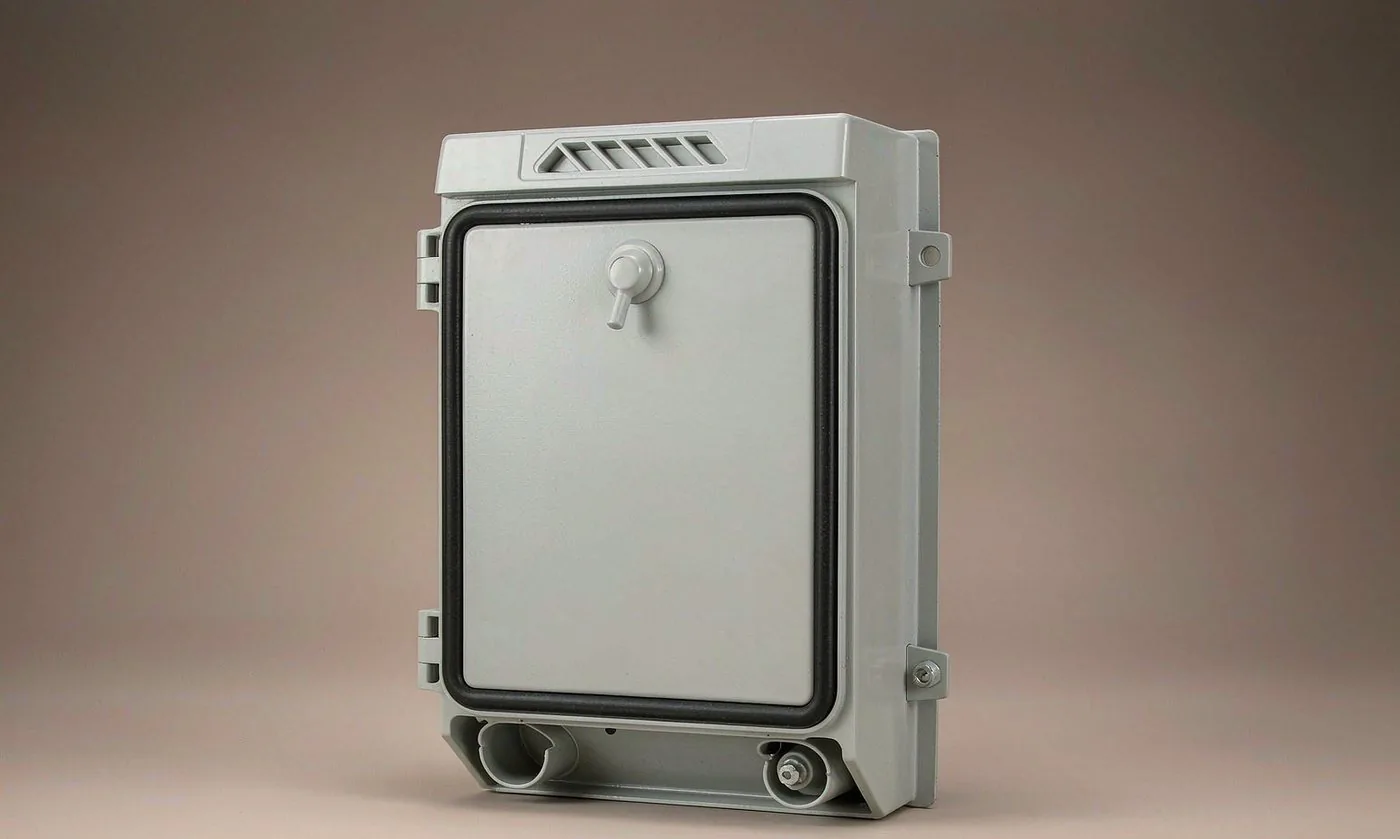
The Range of Distribution Enclosures
| Type | Where it is used | Typical features |
|---|---|---|
| Consumer unit | Domestic and small commercial | Single row of devices, shallow depth |
| Distribution board | Commercial and light industrial | Multiple rows, busbar, cable space |
| Panel board | Industrial | Larger devices, deeper enclosure |
| Meter cabinet | External or in a service area | Meter apertures, sealing, security |
| Floor-standing pillar | Infrastructure and outdoor | Base, drainage, larger volume |
The name changes, the job does not: hold devices, distribute power, allow the cables in and out, and keep unauthorised people away.
Wall-Mount, Floor-Standing and Meter Cabinets
- Surface wall-mounted. The most common; the load path runs into the wall and the mounting method has to suit the wall type.
- Flush wall-mounted. Set into the wall, so the box needs a defined flange and depth, and the finish has to survive the wall being made good around it.
- Floor-standing. Suits larger boards; needs a base, a plinth or feet, and lifting points.
- Meter cabinets. Apertures for the meters, a sealing arrangement and often a higher protection class.
- Pillar or street furniture. Outdoor, with a base, drainage and a security requirement.
Cut-outs, Knock-outs and Entry Provision
- Cut entries to the cable schedule rather than to a generic pattern, and mark them on the drawing.
- Where flexibility is required, use plugged spare entries or removable plates instead of leaving the enclosure weakened.
- Keep entry positions clear of the device zone, so cables can be dressed rather than forced.
- Provide grommets or brush strips so the cable insulation is not damaged at the entry.
- Separate power and signal entries where the specification requires it.
- Remember the earth and neutral conductors need entries too, and they are often forgotten.
DIN Rails, Busbar Supports and Barriers
- Give the DIN rail a defined position and a repeatable fixing pattern, so a pre-assembled rail can be dropped in.
- Allow for the depth of devices mounted on the rail, including the cable that terminates on them.
- Provide busbar supports at defined positions, with the spacing and the thread size on the drawing.
- Design the barrier mounting features into the enclosure rather than adding them later.
- Leave a defined zone for the neutral and earth bars, with the fixing points shown.
- Keep the device zone clear of the entry zone so that cabling does not cross the devices.
Doors, Covers and Access Control
- Use a door where devices need to be accessible, and a screw-fixed cover where access is infrequent.
- Provide multi-point or adequate latching on a large door so the gasket compresses evenly.
- Choose a lock type that matches the site's keying policy, including a tool-operated lock where required.
- Design the door hinge so it can be reversed where the installation requires it.
- Where the door carries a window, seal the window as a defined feature rather than a bonded sheet.
Protection Class for Distribution Boxes
- State the class and the location, because the two together define the requirement.
- Remember that protection is lost at the entries more often than at the door.
- Where the box is in a damp or unfinished space, consider a higher class or a galvanised finish.
- Where the box is outdoors or in a wash-down area, expect the whole construction to change, not just the gasket.
- Where condensation is likely, provide a breather or a drain, and accept that a drain and a high protection class are in tension.
Materials and Finishes
| Material | Typical use | Note |
|---|---|---|
| Cold-rolled steel, powder coated | The general case | Cheap and stiff; mask earth faces |
| Galvanised steel | Damp or unfinished spaces | Good cut-edge protection |
| Stainless 304 | Food and pharmaceutical | Cleanable and corrosion resistant |
| Stainless 316L | Aggressive corrosion | Higher cost, longer life |
| Aluminium | Weight-limited installations | Lighter, needs bonding provision |
Labelling, Identification and the Schedule
- Provide a circuit schedule holder or a defined area for one, because the label is required and it is often left to chance.
- Mark the voltage and warning notices on the outside, applied after coating.
- Mark the device positions consistently with the drawing.
- Provide a unique enclosure identification where the site uses a numbering scheme.
- Where the box is in a public area, keep the markings durable and the identification discreet.
First-Article Checks
| Check | Method | Why |
|---|---|---|
| Entry positions and sizes | Gauge against the cable schedule | Wiring and glanding |
| DIN rail pattern | Gauge | Device fit |
| Busbar support positions | Gauge | Assembly alignment |
| Internal depth | Measured with the devices fitted | Cable space |
| Door fit and latching | Open and close test | Access and gasket compression |
| Earth continuity | Continuity check | Safety |
| Coating and masking | Visual | Bonding and appearance |
Our Approach to Distribution Enclosures
- We fabricate wall-mounted, flush, floor-standing and meter enclosures, doors, covers and internal fixing provisions.
- We cut the entries to the cable schedule and dimension the DIN rail, busbar and barrier features from a single datum.
- We will tell you when the proposed device depth leaves too little room for the wiring the schedule implies.
- We do not supply the protective devices, the busbars, the meters or the wiring, and we do not certify the electrical design or the compliance of the finished board.
- Every quotation states which operations are completed in our plant.
Send the cable schedule, the device list and the wall or floor conditions, and the box can be built so that the electrician installs it rather than repairs it.
Frequently Asked Questions
A distribution box contains protective devices that distribute power to circuits, so its internal arrangement is built around DIN rails, busbars and cable space. A control panel contains control and automation equipment, so it is built around a mounting plate and a signal layout. The enclosures look similar, and often use the same components, but the internal provision, the barriers and the thermal load are different.
A modern fabrication approach usually favours cut-outs made to the cable schedule rather than a set of pre-weakened knock-outs, because laser cutting allows the exact entry positions to be produced consistently and the edges to be clean. Where flexibility on site matters more than appearance, removable plates or plugged spare entries give the same benefit without leaving the enclosure weakened.
Enough for the conductors to be dressed, terminated and, where the specification requires it, to maintain the bending radius and the separation between circuits. The common failure is a box that is deep enough for the devices but not for the wiring. The internal depth and the device depth should be checked together, not separately.
Where the specification calls for segregation between circuits, between incoming and outgoing sections, or between exposed and protected parts, barriers and shrouds are used. They are part of the enclosure rather than accessories, and their mounting features should be designed into the box so that the barrier lands in the right place. Retrofitting a barrier into a finished box is rarely satisfactory.
Powder coating over a cleaned and pre-treated surface is the norm for steel boxes, with masked earth and mounting faces. Galvanised steel is used where the box may be installed in a damp or unfinished space, and stainless is used in food, pharmaceutical and heavily corrosive environments.
Explore Related Capabilities
- Electrical Distribution Boxes — Distribution boards and panel boxes
- Waterproof Junction Boxes — IP-rated junction and terminal boxes
Have a Drawing to Quote?
Send STEP, DXF or PDF drawings and we reply with engineering feedback and a detailed quotation within 24 hours on working days.