Laser Cutting or CNC Punching? Choosing the Right Cutting Process
Process Anjue Metal | Cost & Pricing | 10 min read | Updated Oct 8, 2026
Both processes turn a flat sheet into flat parts. The cost curves, though, are almost opposite: punching gets cheaper the more you make, laser cutting stays competitive at any quantity and handles geometry a punch simply cannot. Here is how to choose, and where the break-even sits.
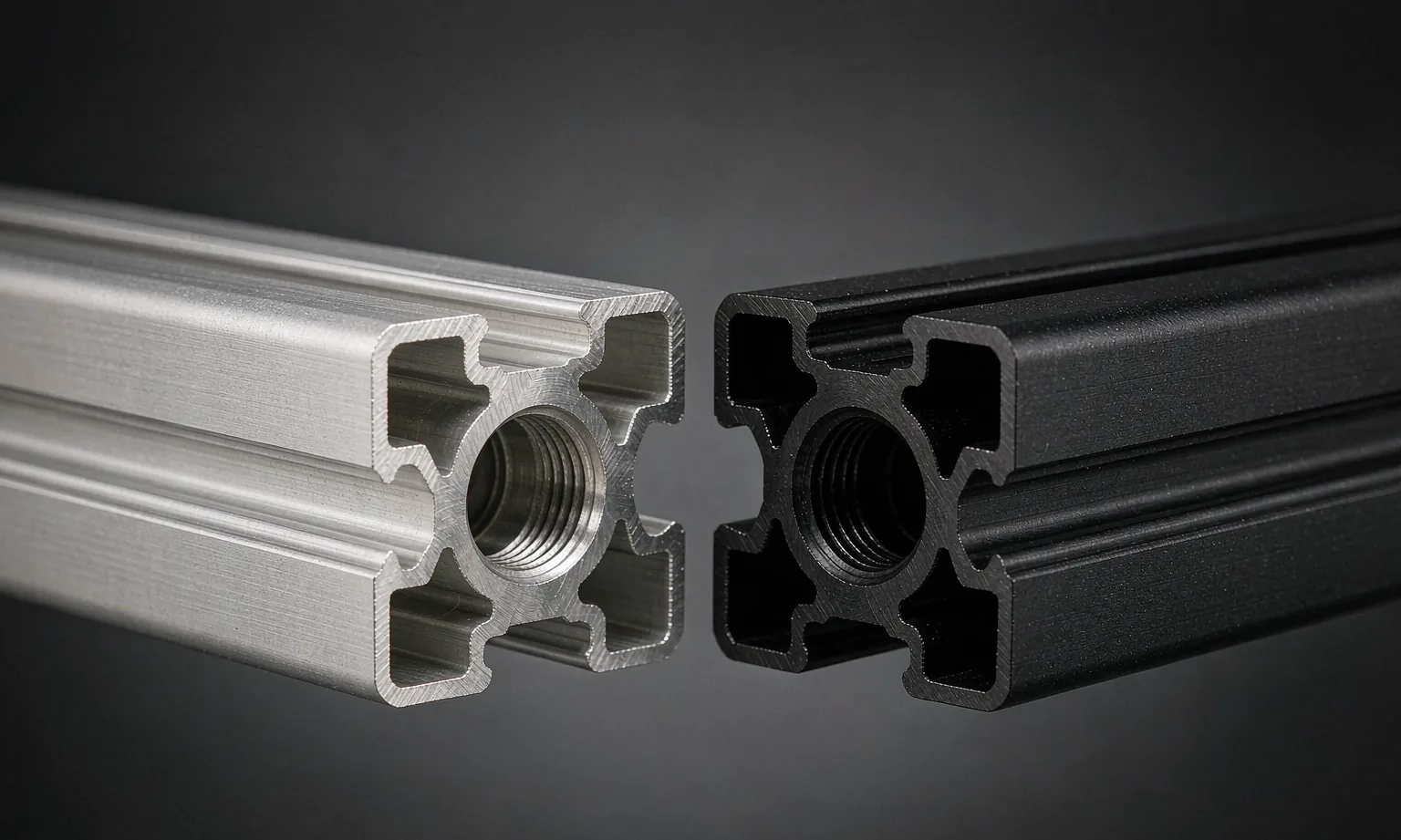
How Each Process Removes Metal
Fiber laser cutting is a thermal process. A focused beam melts or vaporises the material and an assist gas blows the molten metal out of the kerf. There is no contact and no tooling.
CNC punching is a mechanical process. A turret of tooled punches strikes the sheet, removing a slug on each stroke. Holes are made by one strike; larger shapes are made by many overlapping strokes (nibbling) or by special shaped tools.
That mechanical-versus-thermal difference explains everything downstream: tooling cost, edge finish, speed and geometry limits.
Head-to-Head Comparison
| Factor | Fiber laser | CNC punching |
|---|---|---|
| Tooling | None | Tooling per hole size and shape |
| Setup | Very fast | Tool loading and setup per job |
| Speed on dense hole patterns | Good | Excellent - a 5 mm hole is one stroke |
| Speed on long contours | Excellent | Slower, nibbling is inefficient |
| Geometry freedom | Any 2D contour | Limited by available tool shapes |
| Minimum hole size | Roughly 1x thickness, often smaller | Roughly 1x thickness, depends on tool |
| Edge quality | Clean, small heat-affected zone | Clean shear edge, burr on underside |
| Thickness range | Steel up to 20 mm+, economical to about 12 mm | Typically up to 6 mm, comfortable to 4 mm |
| Forming features (louvers, embosses, countersinks) | Not possible | Possible in the same setup |
| Small quantities | Economical | Expensive - setup dominates |
| Large quantities | Competitive | Cheapest at volume |
| Design changes | Free - no tooling impact | May require new tools |
Where the Break-Even Sits
The economics are driven by two things: how many holes the part has, and how many parts you need.
- Very low volume (1 to a few hundred pieces), any geometry: laser wins. There is no tooling and no setup, so the first article is as cheap as the hundredth.
- Medium volume with simple geometry: fairly even. Laser remains the simpler route and avoids tooling risk.
- High volume with dense hole patterns: punching wins clearly. A vent panel with 400 holes is 400 punch strokes (seconds) versus a long laser path (minutes). At tens of thousands of pieces the difference is decisive.
- Any volume with geometry a punch cannot make: laser wins by default. Curved slots, tapered apertures, fine detail and complex outlines all fall outside practical punching.
Note · A pattern worth knowing: many suppliers run both - laser for profiles and low-volume work, punching for repetitive perforated parts. If your supplier only offers one process, their quotation will be biased toward it. Ask which route they used in the quote.
Edge Quality and What It Means Downstream
- Laser edges are clean with a slight oxide or dross depending on assist gas. Nitrogen assist on stainless and aluminium gives edges that are ready to coat. Mild steel cut with oxygen leaves a scale that usually needs removal before painting or welding.
- Punched edges are sheared, with a small roll-over on the top and a burr on the underside. For most enclosures the burr is acceptable; for parts handled by end users, plan a deburring step.
- Heat effects. Laser introduces a narrow heat-affected zone. Very small features - narrow tabs, fine mesh - can distort. Punching introduces no heat but does introduce stress that can bow a large thin panel if hole density is very high.
Both processes need the part to be flat for the following bending operation. In practice, laser-cut parts below about 1 mm in large sizes may need stress-relief consideration if flatness is critical.
Practical Selection Rules
| Your situation | Recommended |
|---|---|
| Prototypes and design iterations | Laser |
| Fewer than about 500 pieces | Laser |
| Panel with many identical small holes, high volume | Punching |
| Custom outline or curved slots | Laser |
| Need louvers, embosses or formed tabs in the same operation | Punching |
| Material thicker than 6 mm | Laser |
| Mixed product family on one sheet | Laser (nesting flexibility) |
| Consistent part, forecast for years | Punching (tooling pays back) |
Design Notes That Reduce Cost Either Way
- Hole diameter at least equal to thickness. Smaller holes are technically possible but slower and prone to punch breakage.
- Space holes at least 1.5 times the thickness from each other and from edges, unless the design genuinely requires more.
- Round the internal corners of cut-outs. Sharp internal corners are stress risers and a common crack origin during bending.
- Keep tolerances realistic. Laser can hold roughly ±0.1 mm on cut profiles; asking for ±0.02 mm on a laser-cut edge means secondary machining and a large price jump.
- Deburring requirement: state whether parts need deburring and edge rounding, because it is a separate manual operation and a common line item in a quotation.
Frequently Asked Questions
Laser cutting, by a wide margin. Punching requires tooling and setup that a single part cannot absorb, while a laser part has no tooling cost at all.
It can in many cases, but quality and speed suffer. As a design rule, keep hole diameter at least equal to material thickness, and confirm anything smaller with the supplier.
Fiber lasers can cut steel well beyond 12 mm, but cost rises sharply with thickness. For enclosures and cabinets, the vast majority of parts sit between 0.5 mm and 6 mm, where fiber laser is fast and economical.
Laser edges are usually clean enough to handle, but if the parts are handled by end users or will be powder coated on visible edges, a light deburr is worthwhile. Tell us the requirement and we will include it.
Yes, those are punch operations. If a design needs louvers or formed features, we route that part to punching or add a secondary operation, and we will tell you which route we used in the quotation.
Explore Related Capabilities
- Precision Sheet Metal Parts — Laser cutting, prototypes and flat parts
- Network & Server Cabinets — Vent panels and dense perforation work
Have a Drawing to Quote?
Send STEP, DXF or PDF drawings and we reply with engineering feedback and a detailed quotation within 24 hours on working days.