Cold-Rolled Steel or Galvanized Steel? Choosing the Base Metal for Your Enclosure
Materials Anjue Metal | Materials | 10 min read | Updated Oct 8, 2026
Cold-rolled steel is still the workhorse of industrial enclosures: strong, cheap, easy to weld and easy to paint. The question is whether your product needs the extra corrosion protection of a zinc coating - and whether that coating will cause problems in your process. This is the practical comparison.
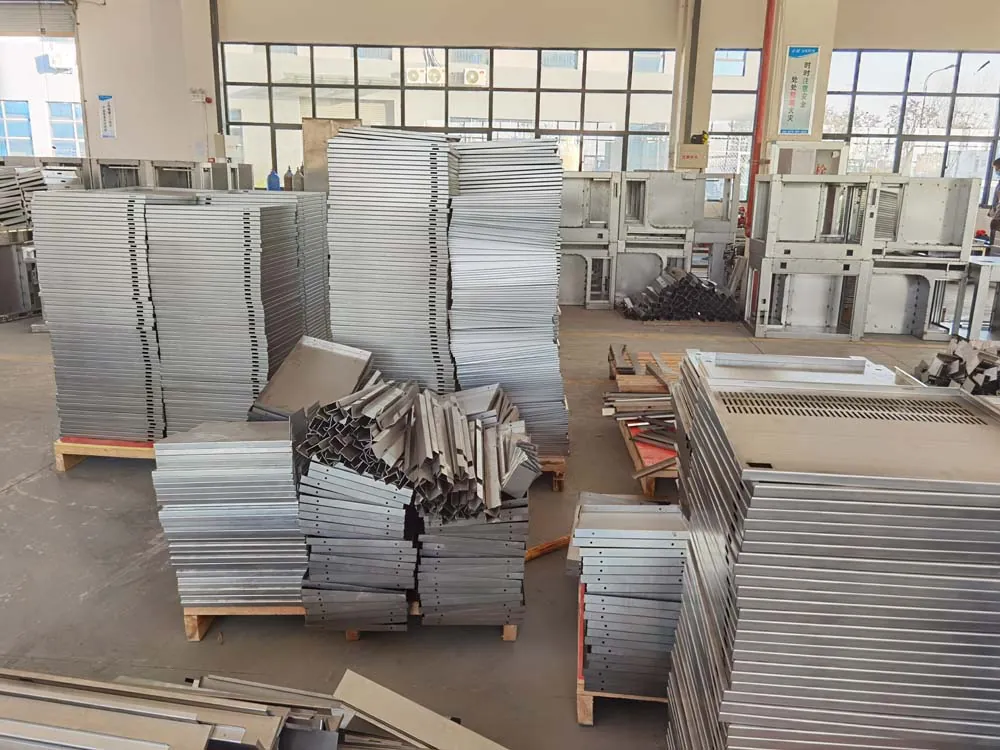
The Three Materials You Are Actually Choosing Between
| Common name | Typical designation | What it is |
|---|---|---|
| Cold-rolled steel | SPCC / DC01 | Bare low-carbon steel, smooth and consistent, no coating |
| Hot-dip galvanized steel | SGCC / DX51D+Z | Steel with a zinc coating (typically 60-275 g/m2 total) |
| Galvanneal | DX51D+ZF | Zinc-iron alloy coating, made for painting |
| Electro-galvanized | SECC / DC01+ZE | Very thin zinc layer, smooth finish, low cost |
Cold-rolled is what most powder-coated enclosures start from. Galvanized and galvanneal are what you move to when the part cannot be fully painted, will be handled roughly, or will spend its life in humid or mildly corrosive air.
How Much Protection Each One Gives
- Bare cold-rolled: zero protection. It must be painted or powder coated, and any breach in the coating - a scratch, a cut edge, a drilled hole - starts rusting immediately.
- Galvanized (zinc coated): the zinc acts sacrificially. At a cut edge or scratch, the surrounding zinc corrodes in preference to the steel, which is why galvanized parts survive cut edges that would rust on cold-rolled parts. Protection lasts roughly in proportion to coating weight.
- Galvanneal: the zinc-iron layer is duller than pure zinc, welds better and takes paint extremely well, but the corrosion protection is a little lower than the same thickness of pure zinc.
- Electro-galvanized: thin coating, smooth surface, excellent paint base. Good for indoor electronics, not for outdoor structural use.
The Weldability Trade-Off
Welding is where galvanized steel punishes an inexperienced supplier.
Zinc boils at around 907 C, well below the melting point of steel. When you weld galvanized material, the coating vaporises, causing:
- Porosity in the weld if the zinc vapour is trapped
- Spatter and a poor-looking bead
- Toxic fume - zinc oxide fume must be extracted. This is a genuine worker-safety matter, not a nuance
- Coating burn-back along both sides of the weld, which then needs repair coating
Practical consequences: a galvanized welded assembly usually needs the weld zone cleaned and re-protected (zinc-rich paint or a touch-up spray) before powder coating. On cold-rolled steel, welding is straightforward and the powder coat covers everything.
Rule of thumb: if the product is heavily welded and will be fully powder coated anyway, use cold-rolled and let the coating do the work. If the product is mostly folded or riveted, or will be installed unpainted, galvanized is the better base.
Paint and Powder Adhesion
- Cold-rolled: the best paint base once degreased and given a conversion coating. Predictable, no surprises.
- Galvanized: requires the correct pre-treatment. Skip it and the coating will flake off in sheets - the classic "galvanized shed paint failure" seen on cheap outdoor products. If your supplier says they simply powder coat galvanized parts, ask what pre-treatment they use.
- Galvanneal: engineered specifically for painting, gives the most reliable coated finish of the three.
Where the Money Goes
| Item | Cold-rolled | Galvanized | Galvanneal |
|---|---|---|---|
| Material cost | Baseline | Roughly 8-20% above cold-rolled | Above galvanized |
| Fabrication cost | Baseline | Same for cutting and bending; higher for welding (cleaning, fume extraction, touch-up) | Same as galvanized |
| Finishing cost | Baseline | Same if pre-treatment is done correctly | Same |
| Corrosion protection as shipped | None without coating | Good | Good, slightly lower than pure zinc |
| Typical best use | Painted enclosures, indoor cabinets | Outdoor unpainted or partially painted parts, ducting, frames | Painted outdoor enclosures |
On a typical powder-coated cabinet, the cheapest correct route is usually cold-rolled steel. Galvanizing costs more and buys nothing if the coating is intact - its value is in surviving coating damage and cut edges.
A Two-Question Decision Path
- Question 1: will the part be fully painted or powder coated, with good coverage on all faces? If yes, cold-rolled steel is usually correct. If no - the part ships bare, or has large cut edges and hidden internal faces - you want a zinc coating.
- Question 2: how aggressive is the environment? Indoor and dry: cold-rolled with paint, or electro-galvanized. Humid, coastal, industrial or outdoor: galvanized or galvanneal, plus a powder coat for the best combination.
Note · The strongest specification for outdoor industrial enclosures is not "galvanized" or "painted" - it is both: galvanized base metal, correctly pre-treated, then powder coated. The zinc handles the damage the coating will inevitably take.
Thickness and Strength Notes
Zinc coating adds protection but not structural strength. Enclosure stiffness comes from thickness, bend geometry and stiffening features:
- 1.0-1.5 mm for small electronics housings and covers
- 1.5-2.0 mm for wall-mounted electrical boxes and medium panels
- 2.0-3.0 mm for floor-standing cabinets, doors and load-bearing frames
- Above 3 mm for structural frames, bases and heavy-duty outdoor cabinets
We form sheet from 0.5 mm to 8 mm. If your drawing calls for galvanized at 2.5 mm or above, confirm availability - heavy galvanized sheet is stocked in narrower size ranges than cold-rolled.
Frequently Asked Questions
Yes, but only with the correct pre-treatment - typically a degrease followed by a suitable conversion coating. Without it, the powder layer can delaminate. Always ask your supplier what pre-treatment they apply to galvanized parts.
It can be done with proper extraction. Zinc oxide fume causes metal fume fever and must be captured at the arc. A supplier welding galvanized steel without fume extraction is cutting a safety corner.
Galvanized steel is cheaper, stiffer and weldable; aluminum will not rust at all and is lighter but roughly 2-3 times the material cost for equivalent stiffness. For large outdoor cabinets on a budget, galvanized plus powder coat is the usual answer.
It depends on coating weight and atmosphere. Zinc coatings are normally rated by measured corrosion rate per environment rather than a fixed life; heavier coatings and inland, low-pollution sites give multi-decade service, while coastal and industrial atmospheres shorten it significantly. Powder coating on top extends it further.
Yes - mill certificates stating grade and coating weight are available for cold-rolled, galvanized and galvanneal orders.
Explore Related Capabilities
- Electrical Enclosures & Cabinets — Wall-mount boxes and floor-standing cabinets
- Outdoor Telecom Cabinets — Weatherproof site cabinets built for real climates
Have a Drawing to Quote?
Send STEP, DXF or PDF drawings and we reply with engineering feedback and a detailed quotation within 24 hours on working days.