Corrosion Protection for Outdoor Power Cabinets: Materials, Coatings and C4/C5 Environments
Finishing Anjue Metal | Finishing | 12 min read | Updated Oct 12, 2026
Corrosion is a specification problem before it is a materials problem. Almost every cabinet that rusts in service was built with a coating system that did not match its environment, or with a pre-treatment that was never specified. Fixing those two things costs far less than replacing the cabinets.
- Corrosion Categories: What C3, C4 and C5 Mean for a Cabinet
- Material Selection: Steel, Galvanised, Aluminium or Stainless
- Pre-Treatment: The Step That Decides Coating Life
- Coating Systems Compared
- Edges, Holes and Cut Faces: Where Corrosion Starts
- Mixing Materials Without Creating a Battery
- Specifying Corrosion Protection on a Drawing
- Our Approach to Corrosion Protection
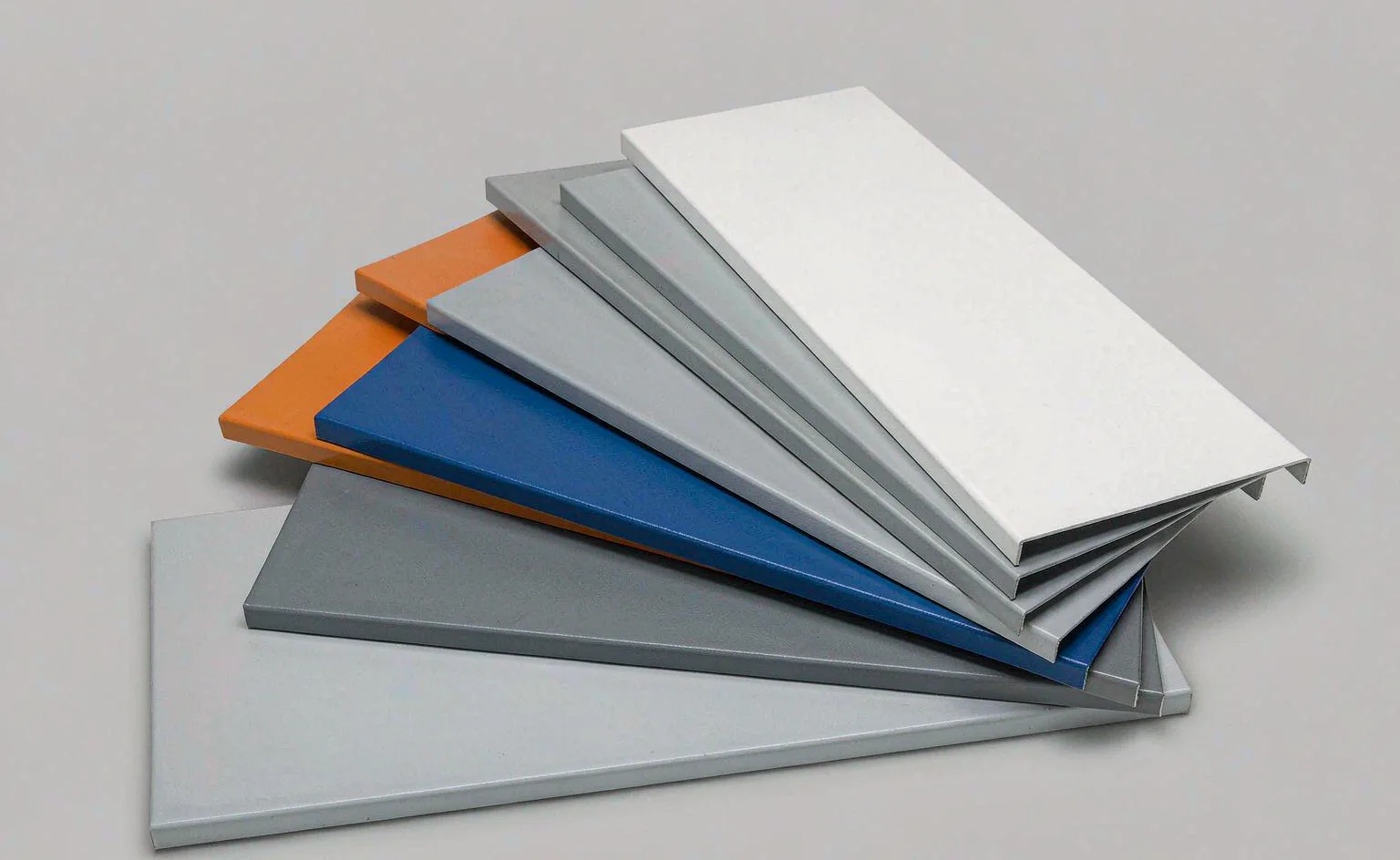
Corrosion Categories: What C3, C4 and C5 Mean for a Cabinet
Corrosion categories exist so that a specification can be written once and understood by everyone in the chain. Instead of arguing about whether a site is "quite salty", the drawing can state the category and the coating system follows from it.
| Category | Typical environment | Usual approach for a cabinet |
|---|---|---|
| C3 | Urban and industrial inland, moderate pollution | Powder coating over correct pre-treatment |
| C4 | Industrial areas and coastal sites at distance from the sea | Heavier coating system, edge protection, galvanised substrate considered |
| C5 | Coastal and offshore, high salinity | Galvanised or stainless substrate, heavy coating system, detailed drainage |
Two practical consequences follow. First, the category has to be stated by the buyer, because the buyer knows the site and the fabricator does not. Second, if the category is not stated, the fabricator will assume something, and the assumption is usually C3 because it is the cheapest to build.
Material Selection: Steel, Galvanised, Aluminium or Stainless
| Substrate | Corrosion behaviour | Best fit |
|---|---|---|
| Cold-rolled steel, coated | Good if the coating is intact and edges are protected | Sheltered and moderate outdoor sites |
| Hot-dip galvanised steel | Sacrificial protection at cut edges | Exposed sites where edges cannot be covered |
| Aluminium | Forms its own oxide layer, good in many atmospheres | Weight-sensitive and moderate environments |
| Stainless 304 | Resists many industrial atmospheres | Industrial outdoor, moderate chloride |
| Stainless 316L | Resists chloride pitting better | Coastal, marine, wash-down |
The choice is rarely about the best material in the abstract. It is about which material, with which treatment, survives the site for the intended service life at a cost the project can carry. Stainless in an inland industrial hall is money spent on nothing; painted cold-rolled steel on a coastal jetty is money saved and then spent again.
Pre-Treatment: The Step That Decides Coating Life
Pre-treatment is where most coating failures originate, and it is the step most often left out of a purchase specification. A coating does not protect the steel. It protects the surface it is bonded to, and if that surface is oily, rusty or poorly converted, the coating will fail from underneath.
The stages that matter:
- Degreasing to remove drawing oils, machining coolant and handling contamination.
- Descaling or derusting so the coating bonds to metal rather than to oxide.
- Conversion coating - a phosphate or equivalent treatment - to give the coating a surface it can key to.
- Rinsing and drying controlled well enough that no residue remains under the film.
- Handling discipline after pre-treatment, so parts are not re-contaminated before coating.
On galvanised substrates the pre-treatment differs, because zinc behaves differently from steel. Sending galvanised parts through a steel pre-treatment line is a common cause of coating adhesion problems, and the specification should say which substrate is being coated.
Coating Systems Compared
| System | Corrosion performance | Notes |
|---|---|---|
| Powder coating, single coat | Moderate | Cost-effective, wide colour choice, needs good pre-treatment |
| Powder coating over conversion coat | Moderate to good | The default for C3 and light C4 |
| Two-coat or heavy-film powder | Good | Higher film build for aggressive sites |
| Wet paint, zinc-rich primer plus topcoat | Good | Useful where a specific primer is required |
| Galvanising alone | Good, but appearance is plain | Sacrificial protection at cut edges |
| Galvanising plus powder coating | Best of the common options | Duplex system; coating life extends well beyond either alone |
Film thickness figures belong in the specification only when they are matched to the environment. A thin film in an aggressive environment fails early; an unnecessarily thick film costs money and can chip. The usual failure mode is not thickness at all, but a missing pre-treatment or bare edges.
Edges, Holes and Cut Faces: Where Corrosion Starts
Corrosion in coated cabinets almost always begins at a discontinuity: a sheared edge, a punched hole, a weld seam, a scratch from handling.
- Sheared edges have a small burr and no coating. On aggressive sites, deburring and edge coverage matter.
- Punched and laser-cut holes have a cut face inside them; where a bolt passes through, the bolt and the hole edge form a crevice.
- Weld seams can trap flux or leave a rough surface; they should be cleaned and, where visible, dressed.
- Handling scratches break the film before the cabinet even leaves the plant; packing and handling practice is part of corrosion protection.
The practical countermeasures are unglamorous: deburr, clean welds, specify edge coverage, and protect parts in transit. They are also far cheaper than replacing cabinets.
Mixing Materials Without Creating a Battery
Where two different metals meet in a wet environment, one will sacrifice itself for the other. The rule is to avoid a large potential difference in contact, and to break the electrical path where it cannot be avoided.
- Isolate with a gasket, a nylon washer or a coated interface between dissimilar metals.
- Choose fixings deliberately: a stainless screw in an aluminium panel is a classic galvanic couple.
- Keep drainage paths clear at joints, since standing water accelerates the reaction.
- Paint both faces where a coated part meets a dissimilar substrate.
This is one of the areas where a well-detailed general arrangement drawing earns its keep, because the fixings and interfaces are decided there.
Specifying Corrosion Protection on a Drawing
A corrosion specification that a fabricator can quote against contains five lines:
1. Corrosion category or a plain description of the site. 2. Substrate - cold-rolled, galvanised, aluminium or stainless, with the grade. 3. Coating system - powder, wet paint, duplex, with colour reference. 4. Pre-treatment appropriate to the substrate. 5. Edge and hole treatment - deburring, edge coverage, sealing of cut faces.
With those five, the quotation is unambiguous and the delivered cabinet has a defined chance of meeting its service life. Without them, both the fabricator and the buyer are guessing, and the guess is only discovered to be wrong after the first winter.
Our Approach to Corrosion Protection
- We coat over a specified pre-treatment and will say when the requested system does not match the stated environment.
- We deburr and prepare cut edges and holes as part of the coating preparation, not as an extra.
- We can propose a duplex system where the site justifies it, and we will say plainly when a cheaper system is sufficient.
- Where anodising or plating is required, those operations are carried out by qualified external partners; the quotation states which operations are completed in our plant.
- We do not certify coating systems against a standard on the buyer's behalf; where a formal test or certificate is required, it is arranged explicitly and stated in the order.
Send the site description and the drawings, and the substrate and coating system can be matched to the environment rather than to habit.
Frequently Asked Questions
Corrosion categories describe how aggressive an environment is, from mild indoor conditions up to marine and offshore exposure. C4 covers outdoor environments with moderate to high pollution or moderate salt exposure, such as industrial areas and coastal sites at some distance from the sea. C5 covers the most aggressive commonly specified conditions, including coastal and offshore installations with high salinity. They matter because they change which coating system and sometimes which material is appropriate.
Powder coating over a correctly specified pre-treatment is the workhorse system for outdoor cabinets and performs well in moderate conditions. It is not magic. Its performance depends on surface preparation, on a film thickness appropriate to the environment, on edge coverage and on the substrate. Where the environment is aggressive, powder coating alone may be insufficient without a galvanised or otherwise protected substrate.
Because coating does not cover a sharp cut edge as thickly as it covers a flat face, and because a cut edge on coated steel exposes the bare substrate. That is why edge coverage, hole preparation and, on aggressive sites, a galvanised or zinc-rich substrate matter more than adding another coat to the flat surfaces.
Stainless is the right answer on coastal, marine and wash-down installations, and the wrong answer indoors where the cost cannot be justified. It also needs specifying properly: 304 is adequate in many industrial settings, while 316L is the usual choice where chlorides are present. Stainless can still corrode if deposits sit on the surface, so design for drainage and cleaning.
They can be used together, but the interface needs thought. Dissimilar metals in contact in a wet environment create galvanic corrosion, so joints should be isolated or the metals chosen to be compatible. Where a galvanised frame carries painted panels, the fixings and the contact faces are the details that decide whether the assembly lasts.
Explore Related Capabilities
- Powder Coating & Finishing — Pre-treatment and coating systems to specification
- Outdoor Battery Cabinets — Weatherproof cabinets for exposed sites
Have a Drawing to Quote?
Send STEP, DXF or PDF drawings and we reply with engineering feedback and a detailed quotation within 24 hours on working days.