Outdoor Durability for EV Charging Enclosures: IP, IK and Vandal Resistance
EV Charging Anjue Metal | EV Charging | 11 min read | Updated Oct 12, 2026
Durability specifications are the most commonly misused part of an enclosure brief. Words like weatherproof and vandal resistant sound like requirements but give a fabricator nothing to build. IP and IK ratings do give something to build, provided they are chosen for the actual site and verified on the actual assembly.
- Turning Vague Words into Testable Requirements
- IP Ratings for Public Chargers
- Impact and the Details That Actually Resist It
- Corrosion Protection for Exposed Sites
- Gaskets, Compression and Checking
- Inspecting Durability on the First Article
- Designing for Service Life, Not Just First Delivery
- Our Approach to Durability Specifications
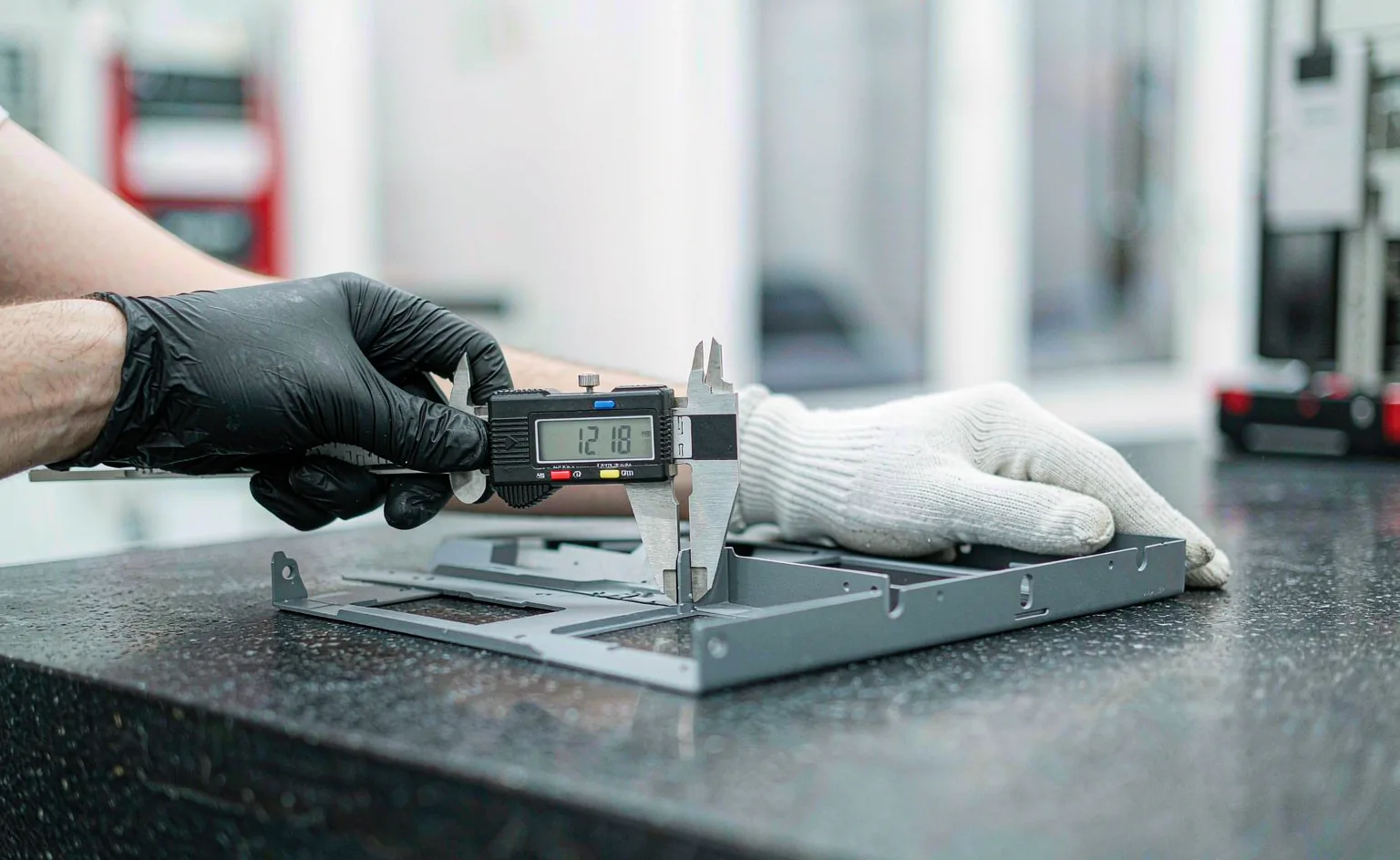
Turning Vague Words into Testable Requirements
"Weatherproof" and "vandal resistant" are not specifications. They are descriptions of an outcome, and they leave the fabricator to guess what the buyer means.
| What buyers say | What a fabricator needs | What it drives |
|---|---|---|
| Weatherproof | Required IP rating and the site environment | Gaskets, entries, louvre design, drainage |
| Vandal resistant | Required IK rating or an impact description | Panel thickness, edge returns, fixings, frame stiffness |
| Long service life | Corrosion category and expected years in service | Substrate, coating system, edge treatment |
| Easy to service | Access requirements and maintenance interval | Door size, hinging, filter access, connector replacement |
The most common failure in this area is a specification written for the product's marketing rather than for manufacture. A single sentence naming the ratings and the environment removes almost all of the ambiguity.
IP Ratings for Public Chargers
The IP rating of a charger is usually two ratings: one for the cabinet and one for the connector interface. Only the first is a sheet metal question, but a brief that does not separate them will produce confusion at the first design review.
- The cabinet is commonly specified between IP54 and IP66 depending on exposure and cleaning method.
- The connector is a separate assembly with its own rating, often higher, and it is supplied by the connector vendor.
- The cabinet-to-connector interface is the joint where both parties have a responsibility, and it should be defined on the drawing.
Within the cabinet, the same rules apply as for any outdoor enclosure: flat gasket surfaces, controlled compression, every entry sealed, and no louvre that offers a straight path for water.
Impact and the Details That Actually Resist It
Impact resistance is decided by the structure, not by a single panel thickness number.
- Edge returns. A formed return on an exposed panel multiplies its resistance for very little weight.
- Fixings. Concealed, security or non-removable fasteners where the public can reach them.
- Frame behind the panel. A stiff frame prevents a local dent from spreading and jamming a door.
- Recessed features. Screens and readers set back behind a lip are much harder to attack than flush-mounted ones.
- Replaceable wear parts. Holsters, cables and connector holders should be designed out rather than built in.
Corrosion Protection for Exposed Sites
Durability in the field is usually corrosion, and corrosion is usually a specification problem.
- State the corrosion category and let the coating system follow from it.
- Protect cut edges and holes, because that is where coated steel begins to corrode.
- Use light colours in direct sun to reduce solar gain, which keeps the electronics cooler and slows coating degradation.
- Design for drainage so water does not stand at the base or pool on a flat roof.
- Consider stainless or duplex systems on coastal and heavily exposed sites rather than relying on a heavier coat of the same system.
Gaskets, Compression and Checking
A gasket is only as good as the surface it seals against and the compression it receives.
- Material choice: matched to the temperature range and to UV exposure, because an exposed charger reaches higher surface temperatures than a sheltered cabinet.
- Compression: set by hinge, stop and latch geometry, not by how hard the last person closed the door.
- Continuity: a gasket line that is interrupted by a latch, a hinge or a weld is a potential path.
- Inspection: gasket compression and gasket line flatness belong on the first-article checklist.
Inspecting Durability on the First Article
| Check | What to confirm | Why it matters |
|---|---|---|
| Gasket line flatness | No step, no weld pull near the seal | A gasket cannot seal an uneven face |
| Gasket compression | Consistent around the perimeter | A leak appears at the least compressed corner |
| Door alignment | Even gap, no sag | Sagging doors leak and jam |
| Entry sealing | Glands sized to the cable, plate sealed | Openings are the most common water path |
| Louvre construction | No straight path through, mesh fitted | Water follows a straight line |
| Panel fixing | Fixings suited to public access | Vandalism usually defeats fixings, not steel |
| Drain and breather | Low point drained, pressure equalised | Condensation damages more cabinets than rain |
Designing for Service Life, Not Just First Delivery
The most durable charger is not necessarily the heaviest. It is the one whose wear parts can be replaced and whose failure modes were anticipated.
- Define the wear parts: connector holster, cable management, door hardware, gaskets, filters.
- Make them replaceable without dismantling the electronics enclosure.
- Write the maintenance interval into the documentation, particularly for filters if forced cooling is used.
- Keep a first-article record of the sealing and alignment checks, so later production can be compared against an agreed baseline.
Our Approach to Durability Specifications
- We build to a stated IP and IK requirement and we ask for the site environment, because durability without a site description cannot be designed.
- We fabricate the edge returns, stiffeners, concealed fixings and drainage features that actually deliver impact and corrosion performance.
- We document the sealing and alignment checks on the first article, so the agreed construction is reproducible.
- Where a formal IP or IK test is required, it is arranged with an independent test house and stated explicitly in the order.
- We do not certify the electrical or safety performance of the charging equipment, and we do not supply the connector assemblies.
Send the site conditions, the target ratings and the drawings, and the durability requirement can be translated into a construction that can be built and checked.
Frequently Asked Questions
Public outdoor chargers are commonly specified IP54 or IP55, with IP66 or IP67 applied to the connector interface and to units installed in exposed or wash-down locations. The rating should be tied to the installation and to the cleaning method used on site. It is also worth distinguishing the rating of the cabinet interior from the rating of the connector, because the two are often different and only one of them is a sheet metal responsibility.
IK ratings describe resistance to mechanical impact, on a scale that runs from very light impact up to heavy blows. Specifying an IK rating is more useful than saying vandal resistant, because it gives a design target that can be tested. In practice the rating is met through panel thickness, edge returns, fixing detail and the stiffness of the structure behind the exposed face.
Not by thickness alone. The measures that matter most are concealed or security fixings, returns on the edges of exposed panels so a lever has nothing to catch, a stiff frame behind the panel, recessed or shielded features, and connectors and holsters designed to be replaced rather than repaired. A thin panel held by four accessible screws fails long before a thicker panel would have made a difference.
It affects corrosion durability and appearance rather than impact resistance. Pre-treatment quality and edge coverage decide whether the finish survives the site. For exposed and coastal locations, a heavier coating system or a galvanised substrate extends service life considerably, and stainless is used where the environment demands it.
Through a first-article inspection that checks the parameters the ratings depend on - gasket compression, surface flatness at the gasket line, continuity of seams, cable entry sealing, louvre construction and panel fixing - and through a formal test by an independent test house where the project requires certification. Those are two different activities and both should be planned rather than assumed.
Explore Related Capabilities
- EV Charging Enclosures — Outdoor-rated charger and wall box bodies
- Powder Coating & Finishing — Coating systems for exposed installations
Have a Drawing to Quote?
Send STEP, DXF or PDF drawings and we reply with engineering feedback and a detailed quotation within 24 hours on working days.