How to Choose Sheet Metal Thickness for Enclosures, Cabinets and Panels
Materials Anjue Metal | Materials | 11 min read | Updated Oct 8, 2026
Thickness is the easiest place to over-specify and the easiest place to under-engineer. Going one gauge heavier rarely feels expensive at the drawing stage, but it multiplies through material, forming force, welding time and weight. Here is how to pick the right number the first time.
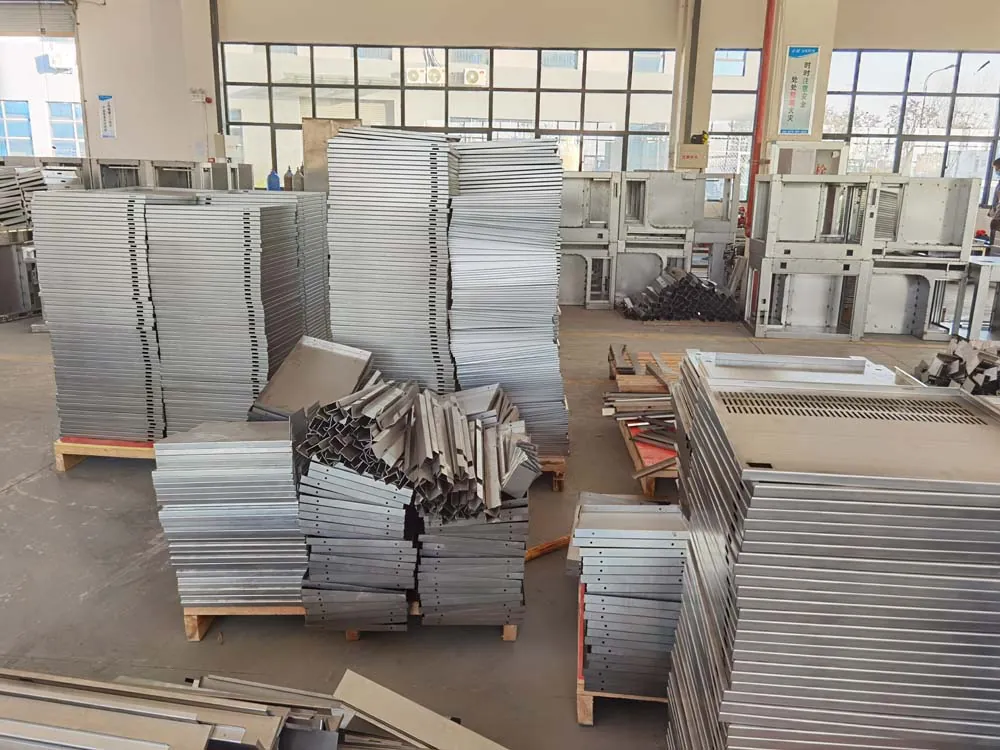
Gauge and Millimetre Are Not the Same Thing
Gauge is a historic system where a higher number means thinner sheet, and it is not consistent between materials - 18 gauge is 1.2 mm in mild steel but 1.0 mm in aluminium. Never specify gauge without stating the material, and never assume a supplier will convert it the way you expect.
| Gauge | Mild steel (mm) | Galvanised (mm) | Aluminium (mm) | Stainless (mm) |
|---|---|---|---|---|
| 26 | 0.45 | 0.55 | 0.40 | 0.45 |
| 24 | 0.60 | 0.70 | 0.51 | 0.60 |
| 22 | 0.75 | 0.85 | 0.64 | 0.75 |
| 20 | 0.90 | 1.00 | 0.81 | 0.90 |
| 18 | 1.20 | 1.20 | 1.02 | 1.20 |
| 16 | 1.50 | 1.50 | 1.29 | 1.50 |
| 14 | 2.00 | 2.00 | 1.63 | 2.00 |
| 12 | 2.50 | 2.50 | 2.05 | 2.50 |
| 11 | 3.00 | 3.00 | 2.29 | 3.00 |
| 10 | 3.50 | 3.50 | 2.59 | 3.50 |
| 7 | 4.50 | 4.50 | 3.66 | 4.50 |
For exported products we recommend specifying millimetres on every drawing. It removes an entire class of misunderstanding, particularly with customers in North America who read gauge in their own tables.
Stiffness Does Not Scale Linearly With Thickness
Bending stiffness of a flat panel goes with the cube of thickness:
Stiffness is proportional to t^3
That has a very practical consequence: going from 1.0 mm to 1.5 mm increases stiffness by a factor of 3.4, not 1.5. But going from 1.5 mm to 2.0 mm costs 33% more material for a 2.4x stiffness gain - and a formed flange or a shallow rib will often beat both, at a fraction of the material cost.
This is why good enclosure design uses geometry for stiffness and thickness for strength. A 1.2 mm panel with a 15 mm flange is stiffer in bending than a flat 2 mm panel, and weighs less.
Practical Span Rules
| Unsigned flat panel span | Suggested thickness | Comment |
|---|---|---|
| Up to 300 mm | 0.8 - 1.0 mm | Cover plates, small doors |
| 300 - 600 mm | 1.2 - 1.5 mm | Typical control cabinet door or side panel |
| 600 - 900 mm | 1.5 - 2.0 mm | Flange all four edges, or add a rib |
| 900 - 1200 mm | 2.0 - 2.5 mm | Definitely rib or flange; consider a double-skin |
| Over 1200 mm | 2.5 - 3.0 mm plus stiffening | Panel will drum without geometry |
The roughly-100x-thickness rule is a useful starting sanity check: an unsupported flat panel starts to feel flimsy and to drum at around 100 times its thickness in span. 1.5 mm sheet therefore wants support or stiffening beyond about 150 mm of free span. Exceed it and the panel will oil-can when you press on it and will vibrate and hum in service.
Doors: Where Thickness Is Not the Answer
A door is a panel plus a hinge load plus a gasket load, and it is the part most commonly designed too thin and then re-designed.
- Door sag is driven by hinge stiffness and door weight, not door thickness alone.
- Door bow in the middle is the sealing killer, and the fix is a flange or a rib, not more thickness.
- The standard solution for a door over about 500 mm tall: form a flange on all four sides, and use a continuous hinge. The flange multiplies stiffness for almost no material cost.
- A double-skin door (outer panel plus an inner liner) is what premium cabinets do - it hides fasteners, allows a flush outer face and adds stiffness without a heavy gauge.
What Each Extra 0.5 mm Costs You
| Effect | Direction |
|---|---|
| Material cost | Rises approximately 25-35% for a 0.5 mm increase on light gauge |
| Weight | Rises proportionally - matters for shipping and for handling in the field |
| Forming force | Higher; may need a bigger press brake or different tooling |
| Springback | Larger; more compensation needed and wider angle tolerance |
| Minimum bend radius | Increases, which changes corner geometry |
| Weldability | Generally easier, but heat input rises and distortion risk with it |
| Hardware | Rivet nuts and clinch inserts may become easier to install |
| Drumming | Improves, but geometry still beats thickness |
For export products, weight is an underrated cost: it affects freight, pallet loading and manual handling. A design that shaves 0.3 mm off a large panel while adding a formed rib is often cheaper landed than a heavier flat panel.

Stiffening Without Adding Thickness
Options, in rough order of cost-effectiveness:
- Flanged edges. One bend along each free edge. Cheapest and most effective.
- Swan-neck or offset stiffeners. A formed rib that runs across the panel; adds stiffness where a flange cannot go.
- Beaded or ribbed patterns. Common on thin covers; also improves appearance.
- Return flanges and hemmed edges. Also removes the sharp edge - a safety and coating benefit.
- Internal ribs formed into the part rather than welded on - cheaper and no distortion.
- Separate reinforcing channel welded or riveted on - the most expensive option and the one that distorts most.
- Double-skin or bonded panel where acoustic damping or a flush face is needed anyway.
Thickness by Material
Aluminium is about one third the density of steel and roughly one third the modulus, so for equal stiffness aluminium needs to be about 1.4 times thicker. That is why an aluminium enclosure is often the same weight as a steel one at equal stiffness - the benefit of aluminium is usually corrosion resistance and formability, not weight, unless the design is stiffness-limited by something else.
| If your steel design is | A comparable aluminium design is roughly |
|---|---|
| 1.0 mm | 1.4 mm |
| 1.5 mm | 2.0 mm |
| 2.0 mm | 2.5 - 3.0 mm |
Stainless behaves mechanically much like mild steel for stiffness, but work-hardens faster and needs bigger bend radii. A stainless panel is often specified thinner than the equivalent steel panel for corrosion reasons while being similar or heavier in weight.
Recommendations by Application
| Application | Recommended thickness | Why |
|---|---|---|
| Indoor electronics housing, small | 0.8 - 1.0 mm | Light, cheap, flanged |
| Rack and 1U-4U chassis | 1.0 - 1.5 mm | Needs flatness for board location |
| HMI and control panel box | 1.2 - 1.5 mm | Wall mount plus door stiffness |
| Indoor control cabinet | 1.5 - 2.0 mm | Door span and gasket force |
| Outdoor telecom cabinet | 1.5 - 2.0 mm galvanised or 304 | Corrosion plus weather load |
| EV charger enclosure | 1.5 - 2.0 mm | Impact and vandal resistance |
| Energy storage cabinet shell | 1.5 - 2.5 mm | Structural and fire-rated assemblies |
| Machine guard | 2.0 - 3.0 mm | Impact and safety |
| Base plate and mounting bracket | 3.0 - 6.0 mm | Load bearing |
Note · The most common over-specification we see is a small indoor box drawn at 2 mm because it "feels solid". At 1.2 mm with a flanged edge it would be stiffer in the panel, lighter and materially cheaper, and would still pass a drop test. The second most common error is the opposite - a large door at 1.2 mm with no flange, which will not seal.
Thickness Capability
- Sheet steel 0.5 mm to 8.0 mm, aluminium from 0.8 mm, stainless from 0.5 mm.
- Maximum sheet size 3000 x 1500 mm, which sets the largest single-piece panel.
- Press brake capacity for full-length bends, with special tooling where a flange design demands it.
- If your drawing specifies a thickness that will not hold the flatness or sealing requirement, we say so at quotation and propose either a geometry change or a gauge change - whichever is cheaper.
Frequently Asked Questions
For a small indoor electronics box, 0.8-1.2 mm with flanged edges. For a control cabinet with a door, 1.5-2.0 mm. For outdoor cabinets, 1.5-2.0 mm in galvanised steel or stainless. For a machine guard or anything taking impact, 2.0-3.0 mm. The span and the door size matter more than the enclosure's overall dimensions.
Gauge is a historic weight-based system, and a given gauge number corresponds to different actual thicknesses in steel, galvanised steel, aluminium and stainless. 18 gauge is about 1.2 mm in mild steel but about 1.0 mm in aluminium. Always specify millimetres on exported drawings.
Almost always stiffeners. Panel stiffness rises with the cube of thickness, so going from 1.0 mm to 1.5 mm gives about 3.4 times the stiffness - but a formed flange on the same 1.0 mm panel often gives more than that at a fraction of the material cost and weight. Use thickness for strength and geometry for stiffness.
Form a flange on all four edges of the door and use a continuous hinge rather than two butt hinges. A flat door spanning 600 mm will bow under gasket load no matter what gauge you use, which is why the centre of the seal fails first. A double-skin door is the premium solution.
Yes, we work up to 8 mm. Be aware that thicker sheet needs larger minimum bend radii, more forming force and produces more springback, so angle tolerance widens and the tooling may need to change. It is also significantly heavier, which matters for export freight.
Explore Related Capabilities
- Cold-Rolled and Galvanised Steel — Sheet steel selection for enclosures and cabinets
- Industrial Control Panel Enclosures — Wall-mount and floor-standing control cabinets
Have a Drawing to Quote?
Send STEP, DXF or PDF drawings and we reply with engineering feedback and a detailed quotation within 24 hours on working days.