Waterproof Junction Box Fabrication: IP-Rated Terminal and Junction Boxes
Junction Boxes Anjue Metal | Industrial | 10 min read | Updated Oct 12, 2026
A junction box is the least glamorous enclosure in a project and the one most likely to be blamed for a fault. It has one job: to join conductors and keep the environment away from them. Everything that determines whether it succeeds is decided by the gasket, the entry and the surface the gasket seals against.
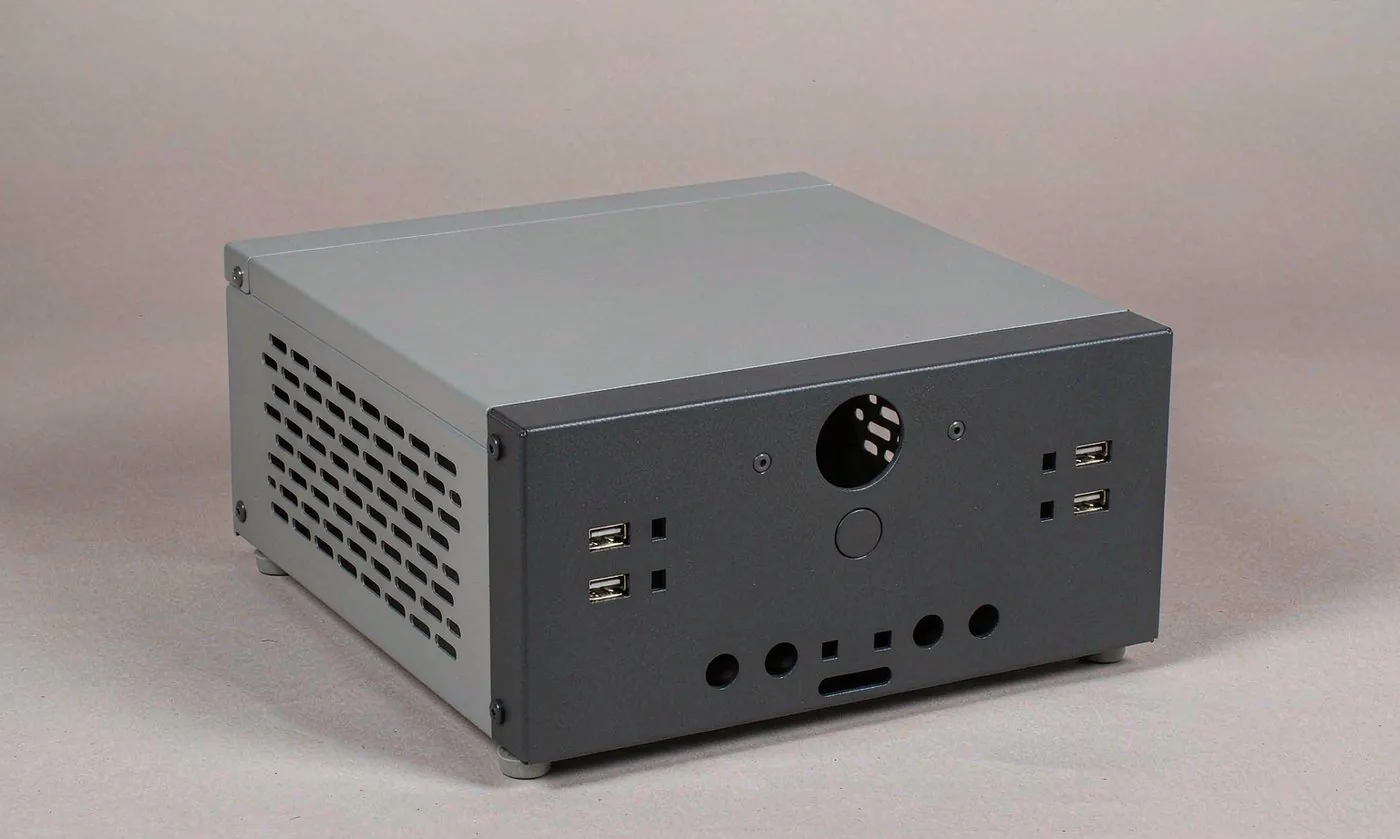
What Makes a Junction Box Waterproof
| Element | What it does | How it fails |
|---|---|---|
| Gasket | Seals the lid to the body | Compressed unevenly, damaged, wrong material |
| Lid stiffness | Keeps the gasket loaded evenly | Bows between fixings |
| Sealing face | Gives the gasket a surface to seal against | Distorted by welding or forming |
| Entries | Seal the cables | Undersized glands, hand-drilled holes |
| Drain and breather | Manages condensation | Omitted, or fighting the rating |
| Coating | Protects the substrate | Thin at cut edges and holes |
Every one of these is a fabrication detail, which is why a rated box is a manufacturing achievement rather than a component purchase.
Formats and Sizes
- Rectangular lid boxes. The general-purpose format, with a gasket in a groove or on a flange.
- Screw-fixed lids. Simple and reliable, provided the fixings are spaced closely enough for even compression.
- Hinged and latched. Used where frequent access is needed; the latch has to load the gasket rather than just hold the lid.
- Terminal boxes. Smaller, often with a terminal rail inside and a defined entry pattern.
- Adaptable and modular boxes. Larger enclosures that accept a range of entries and internal fittings.
- Small stainless boxes. Common in food, marine and chemical environments.
Gaskets, Sealing and Entry Design
- Use a continuous gasket, and hold it in a groove or on a flange that keeps it in position during assembly.
- Space the fixings closely enough that the lid does not bow between them.
- Keep the sealing face flat, and avoid welding near the gasket line.
- Match the gasket material to the temperature range, the UV exposure and the cleaning chemicals.
- Provide for the lid to be replaced correctly, so that a service does not invert or displace the gasket.
- Where the box is large, consider a captive gasket and a defined lid orientation.
Gland Entries and Cable Management
- Cut the entries to the cable schedule, with the positions marked on the drawing.
- Provide plugged spare entries so that a future cable does not require a hole to be cut on site.
- Provide a gland plate where the entry arrangement is likely to change.
- Keep entries away from the gasket line so that a gland cannot interfere with the seal.
- Provide internal space for the conductors to be dressed and for the terminals to be accessible.
- Where cables enter from above, arrange the entry so that water cannot follow the cable in.
Materials and Coatings
| Material | Best for | Note |
|---|---|---|
| Coated steel | General indoor and sheltered | Cheap, stiff, mask earth faces |
| Galvanised steel | Damp and unfinished spaces | Good cut-edge protection |
| Stainless 304 | Food, marine, chemical | Cleanable, corrosion resistant |
| Stainless 316L | Aggressive environments | Higher cost, longer life |
| Aluminium | Weight-limited installations | Consider galvanic isolation from steel fixings |
The fixings are part of the material choice: a stainless screw in a coated steel box is a corrosion risk once water reaches the joint, so an isolating washer or a matching material should be specified.
Fixing, Mounting and Installation
- Provide mounting feet or lugs that suit the surface, whether a wall, a strut or a machine frame.
- Keep the mounting features outside the sealed volume where possible, so that a fixing hole cannot become a leak path.
- Provide fixing positions that allow a tool to reach them once the box is installed.
- Where the box is heavy, provide lifting or support provision rather than relying on the fixings.
- Where the box is outdoors, mount it so that water does not stand on the lid or pool around the base.
Testing and What a Rating Means
- A rating is a property of the installed assembly, including the glands.
- First-article verification checks the features the rating depends on: gasket compression, lid flatness and entry sealing.
- Formal testing to the relevant standard is arranged with an independent test house where the project requires certification.
- A spare entry that is plugged is part of the assembly and must be sealed to the same standard.
- A drain or breather is a deliberate compromise and should be declared rather than hidden.
First-Article Checks
| Check | Method | Why |
|---|---|---|
| Lid flatness on the seal path | Straight edge | A bowed lid leaks |
| Gasket compression | Feeler gauge or witness marks | Even sealing |
| Entry positions and sizes | Gauge against the schedule | Glands must fit |
| Entry sealing | Visual and, where required, test | The usual leak path |
| Coating thickness and coverage | Gauge | Durability |
| Earth continuity | Continuity check | Safety where applicable |
| Fixings and threads | Visual and fit | Assembly and service |
Our Approach to Junction Boxes
- We fabricate lid boxes, terminal boxes and adaptable enclosures in steel, galvanised steel, aluminium and stainless.
- We cut the entries to the cable schedule, keep the sealing face flat and space the fixings for even gasket compression.
- We will tell you when a requested rating and a requested entry arrangement are in conflict.
- We do not supply the glands, the terminals or the wiring, and we do not certify the electrical installation or the assembled box's rating unless an independent test is commissioned.
- Every quotation states which operations are completed in our plant.
Send the entry schedule, the location and the required rating, and the box can be built so that the rating survives installation rather than only surviving the workshop.
Frequently Asked Questions
A continuous gasket, compressed evenly by a lid or door that is stiff enough not to bow, a surface under the gasket that is flat and clean, and entries that are sealed with the correct glands. All four are needed. A good gasket on a bowed lid leaks, and a perfect lid with an undersized gland leaks, so the rating belongs to the assembly rather than to any one part.
It should follow the location. IP54 or IP55 is common indoors in a benign environment, IP65 or IP66 for outdoor and wash-down areas, and higher where the box may be immersed. The rating of the installed box also depends on the glands, so the specification should say whether the glands are part of the delivery or supplied by the installer.
Cut entries made to the cable schedule give the most consistent result, because the position and size are produced accurately and the cut edge is clean. Where the installer needs flexibility, removable plates or plugged spare entries achieve the same result without weakening the box. Hand-drilled entries on site are the most common reason a rated box fails.
Powder-coated steel is adequate in benign outdoor locations, galvanised steel where the box is exposed to damp, and stainless where there is salt, chemical exposure or a hygiene requirement. Aluminium is used where weight matters. The material should be chosen with the fixings in mind, because a stainless fixing in a coated steel box creates a galvanic pair if water reaches the joint.
By a first-article check of the features the rating depends on, such as gasket compression, lid flatness on the seal path and entry sealing, and by a formal test to the relevant standard where the project requires certification. A production box is normally verified by dimensional and visual checks against the agreed first article rather than by repeating the full test.
Explore Related Capabilities
- Waterproof Junction Boxes — IP-rated junction and terminal boxes
- Electrical Distribution Boxes — Distribution and panel boxes
Have a Drawing to Quote?
Send STEP, DXF or PDF drawings and we reply with engineering feedback and a detailed quotation within 24 hours on working days.