Welding Methods for Sheet Metal Enclosures: TIG, MIG, Spot and Laser
Process Anjue Metal | Welding | 12 min read | Updated Oct 8, 2026
Four processes can join two pieces of sheet, and they produce very different results at very different costs. Choosing the right one is mostly about three questions: does it show, does it need to seal, and how much distortion can the part tolerate.
- The Four Processes Side by Side
- Spot Welding: The Underrated Workhorse
- TIG: The Appearance Standard
- MIG: Speed for Steel
- Laser Welding: Low Distortion at Speed
- Choosing a Process by Distortion Tolerance
- Welding for Watertight and IP-Rated Enclosures
- Process by Material
- Cost Per Metre Versus Total Cost
- What to Put on the Drawing
- Welding at Anjue Metal
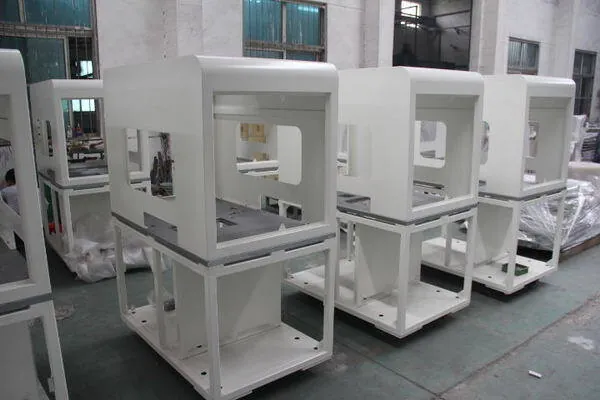
The Four Processes Side by Side
| Process | Speed | Heat input | Appearance | Seals? | Typical use |
|---|---|---|---|---|---|
| Spot (resistance) | Very fast | Low, localised | Visible dimples or marks | No | Stiffeners, internal brackets, tacking |
| TIG | Slow | High, controlled | Best - smooth, clean bead | Yes, with skill | Visible stainless seams, thin material, food and sanitary |
| MIG | Fast | High, broader | Good - flatter, less neat | Yes | Steel frames, thicker sections, production runs |
| Laser | Very fast | Very low | Excellent, minimal HAZ | Yes | Precision parts, thin gauge, high volume, low distortion |
Spot Welding: The Underrated Workhorse
Resistance spot welding passes current through overlapping sheets held under electrode force. It leaves a small mark on both faces, needs access from both sides, and does not seal.
Where it wins:
- Internal stiffeners, brackets and reinforcements that will never be seen.
- Tacking an assembly square before final welding - faster and less distorting than TIG tacks.
- High-volume steel assemblies where a jig can present the part to a stationary machine.
Where it does not:
- Aluminium, which conducts heat away too fast for reliable resistance welding without special equipment.
- Anything that must be watertight.
- Visible cosmetic faces, unless the marking is acceptable or can be finished out.
TIG: The Appearance Standard
Tungsten inert gas welding gives the most control and the cleanest bead. It is the default for visible stainless seams.
- Best for: 0.5-3 mm stainless and aluminium; visible seams; sanitary and food equipment; parts where a bead will be left as-welded rather than ground.
- Advantages: precise heat control, no spatter, clean appearance, good for thin sheet where MIG would burn through.
- Limitations: slow, and it puts a lot of heat into a small area, so distortion must be managed with sequence, clamping and heat sinks.
- Cost: highest labour per metre of weld.
For stainless, TIG followed by passivation is the correct sequence. A beautiful bead that is never cleaned will still show rust streaks.
MIG: Speed for Steel
Metal inert gas welding is faster and more forgiving on thicker material.
- Best for: steel frames, thicker sheet, long straight seams, general production.
- Advantages: high deposition rate, easy to automate, tolerant of fit-up gaps.
- Limitations: more spatter, a flatter and less tidy bead, more heat spread on thin sheet.
- Some shops use MIG with a short-arc or pulsed mode on thin sheet; the result is acceptable for painted parts but rarely for as-welded stainless.
Laser Welding: Low Distortion at Speed
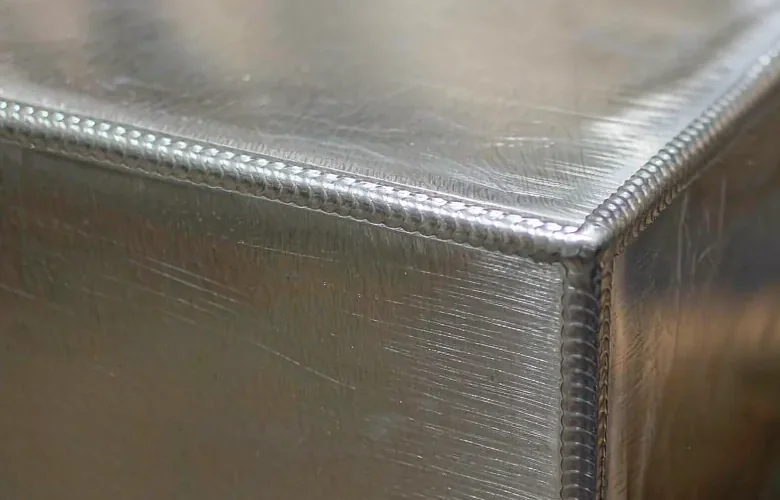
Laser welding uses a focused beam for a narrow, fast, low-heat-input weld.
- Best for: thin gauge (0.5-2 mm), parts with tight tolerance, high volume, and enclosures where distortion is the enemy.
- Advantages: minimal heat-affected zone, so almost no distortion; very fast; clean and repeatable; can be automated with a scanner head.
- Limitations: needs tight fit-up (gaps are not forgiven), higher capital cost, and it does not suit thick sections.
- For sealed enclosures in thin gauge, laser welding is often the process that makes the tolerance achievable at all.
Choosing a Process by Distortion Tolerance
Distortion is usually the deciding factor for enclosures, because a warped door will not seal and a warped panel will not sit flat on a frame.
| Distortion control method | Effect |
|---|---|
| Laser welding | Best - minimal heat input |
| Spot welding for tacking | Very good - localised and fast |
| Balanced weld sequence (backstep, alternate sides) | Good - spreads heat |
| Copper or aluminium heat sink behind the joint | Good - draws heat out |
| Clamping in a fixture | Good - holds geometry while cooling |
| TIG stitch welding with cooling between passes | Moderate |
| Continuous MIG on thin sheet | Poorest - highest heat, most movement |
If your enclosure has a gasketed door or a flat panel that must sit within 0.5 mm, tell the supplier at quotation. The process choice and the fixturing plan change completely, and it is much cheaper to plan for it than to straighten parts afterwards. See our dedicated guide to welding distortion for the detailed techniques.
Welding for Watertight and IP-Rated Enclosures
A welded enclosure does not become watertight because it is welded. It becomes watertight because the weld is continuous and then sealed.
- Continuous welds on every seam where water can pool or run.
- Stitch welding is not a sealing strategy. A leakage path exists between every pair of stitches.
- Seam sealant - a fillet of polyurethane or silicone inside the seam - is standard practice on cabinets, and is often what actually provides the seal.
- Corners are the first leak point on a folded cabinet. A short weld in each corner is cheap insurance.
- After welding, check by water test if the rating matters. It is much cheaper to find a leak in the factory than on the customer site.
Process by Material
| Material | Recommended process | Notes |
|---|---|---|
| Cold-rolled steel | Spot, MIG, laser | All viable; MIG for frames, spot for stiffeners |
| Galvanised steel | MIG with correct wire, laser | Zinc fumes are a health issue; needs extraction and specific filler |
| Stainless 304 / 316L | TIG, laser, spot | TIG for appearance; passivate after welding |
| Aluminium 5052 | TIG, laser | MIG possible with spool gun; oxide layer must be cleaned first |
| Aluminium 6061-T6 | TIG with filler | Heat-affected zone loses temper; account for strength in design |
Cost Per Metre Versus Total Cost
| Process | Relative cost per metre of weld | What it really costs |
|---|---|---|
| Spot | Lowest | Electrode maintenance; no sealing capability |
| MIG | Low-medium | Spatter cleaning and painting prep |
| TIG | High | Labour time; excellent appearance and sealing |
| Laser | Medium per metre, high setup | Capital cost amortised over volume; minimal rework |
The trap is comparing only weld cost. A cheaper weld that distorts the part means rework, straightening, a thicker material choice, or an extra flattening operation - all of which cost more than the weld saved. Total cost includes the straightening and the scrap.
Note · For a gasketed enclosure we normally quote the process combination that holds the geometry, not the one with the lowest per-metre rate. That is why two quotes for the same drawing can differ so much: one has planned the fixturing and the other has not.
What to Put on the Drawing
- Whether welds are visible or hidden - appearance expectation must be stated, not assumed.
- Whether the assembly must be watertight or only structurally sound.
- Whether the weld should be left as-welded, cleaned or ground flush.
- Which process, if the finish depends on it (for example, TIG only on stainless).
- Post-weld operations: cleaning, passivation, annealing or stress relief.
- Any flatness requirement after welding, with a number.
Welding at Anjue Metal
- TIG, MIG and spot welding in house, with laser welding for thin-gauge, low-distortion assemblies.
- Fixturing planned at quotation for any part with a flatness or gasket requirement, rather than discovered on the bench.
- Continuous welds and seam sealant applied to all outdoor and IP-targeted cabinets.
- Stainless assemblies cleaned and passivated after welding as standard, not on request.
Frequently Asked Questions
TIG, if any of the weld is visible or if the part is thin. TIG gives a cleaner bead and better control on 0.5-3 mm stainless. MIG is faster and cheaper for steel frames and thicker sections, but the bead is flatter and needs more cleaning before finishing.
No. It needs continuous welds on every seam where water can pool, seam sealant inside those seams, and welds at the corners. Stitch welding leaves a leakage path between every pair of stitches. For an IP rating, we recommend a factory water test before shipment.
By choosing a low-heat process, tacking first with spot welds, using a balanced sequence, clamping in a fixture and using a heat sink to draw heat away. Laser welding solves most of the problem on thin gauge. If the part has a flatness requirement, tell us at quotation rather than after the first article.
Yes, with the correct filler wire and proper fume extraction, because the zinc coating vaporises and produces hazardous fumes. The zinc is burnt away at the weld, so the weld and its heat-affected zone need re-protection, typically with a zinc-rich primer before topcoating.
It is when distortion is the real problem - thin gauge, tight tolerance, gasketed doors, or a part that must stay flat. The per-metre cost looks higher than spot or MIG, but for parts that would otherwise need straightening or a thicker gauge, the total cost is often lower.
Explore Related Capabilities
- Welding and Assembly — TIG, MIG, spot and laser welding with planned fixturing
- Stainless Steel Fabrication — Welded stainless assemblies with cleaning and passivation
Have a Drawing to Quote?
Send STEP, DXF or PDF drawings and we reply with engineering feedback and a detailed quotation within 24 hours on working days.